

Most people who ask about bonding have one thing in mind: a chipped front tooth, a small gap, an edge that has worn uneven. Bonding is often the right answer for exactly those things. It’s tooth-colored composite added to the tooth instead of cutting into it, which makes it the conservative option, and a chipped edge is usually fixed in a single visit.
What we want to know first is why the tooth chipped or the gap is there. That part decides whether the bonding lasts.
The short answer: bonding handles small chips, small gaps and edges that need rebuilding, without removing tooth to do it. It stains and chips sooner than porcelain, but it can be repolished, repaired and added to in the chair. When the change is bigger, in color, shape or length, or too much tooth is gone for bonding to hold, porcelain veneers or crowns are the better fix, and we’ll tell you which.
What bonding is good for
- Chipped front teeth. A broken corner or a jagged edge, rebuilt to its old shape. Why teeth keep chipping.
- Worn biting edges. Front teeth that have gotten shorter or uneven. When bonding is enough for worn front teeth, and when it isn’t.
- Small gaps between teeth. Including the dark triangles that can show up at the gumline after braces or aligners.
- Notches at the gumline. When one needs treatment, it can often be covered with bonding. What causes those notches.
- Finishing touches after Invisalign. Once teeth are where they belong, bonding can even out edges that never matched.
Find the cause first
Enamel doesn’t grow back, so whatever chipped or wore it is still at work, and new bonding placed into an unchanged mouth tends to fail the same way the enamel did. People who come to us having had the same front teeth bonded three times are almost always people whose cause was never found.
So we look at where the chips are, how your teeth meet, whether a few teeth are taking more of the load than the rest, and whether acid from drinks or reflux is part of it. Gaps get the same question: teeth that drift apart are being pushed by something, and closing the gap with bonding doesn’t stop the push. Photographs and a 3D scan give us a baseline to compare against later.
Whiten first, if you’re going to. Composite doesn’t whiten. Bonding is matched to your teeth as they are the day it’s placed, so if you want your teeth lighter, whiten before we match the shade, not after.
What a bonding visit is like
Dr. Sandquist does the bonding himself. Most of the time it doesn’t need numbing, because we’re adding to the tooth rather than drilling into it, and a chipped edge is usually done in one visit. If you’re whitening, that comes first.
Real cases
One chipped tooth, one visit: G.F.
This is the most common bonding we do. G.F. had broken a corner off one front tooth. We rebuilt it with composite at a single visit. The before and after photos were taken 16 minutes apart.

Before. The corner of the front tooth has broken off.

After. The corner rebuilt with composite, at the same visit.
Chipped front teeth: K.G.
K.G. came in for a back tooth that was giving her trouble. Once that was under control, a full exam found her front teeth had been breaking back unevenly for a while. We talked through ceramic veneers against composite bonding, and she chose bonding on the front four.
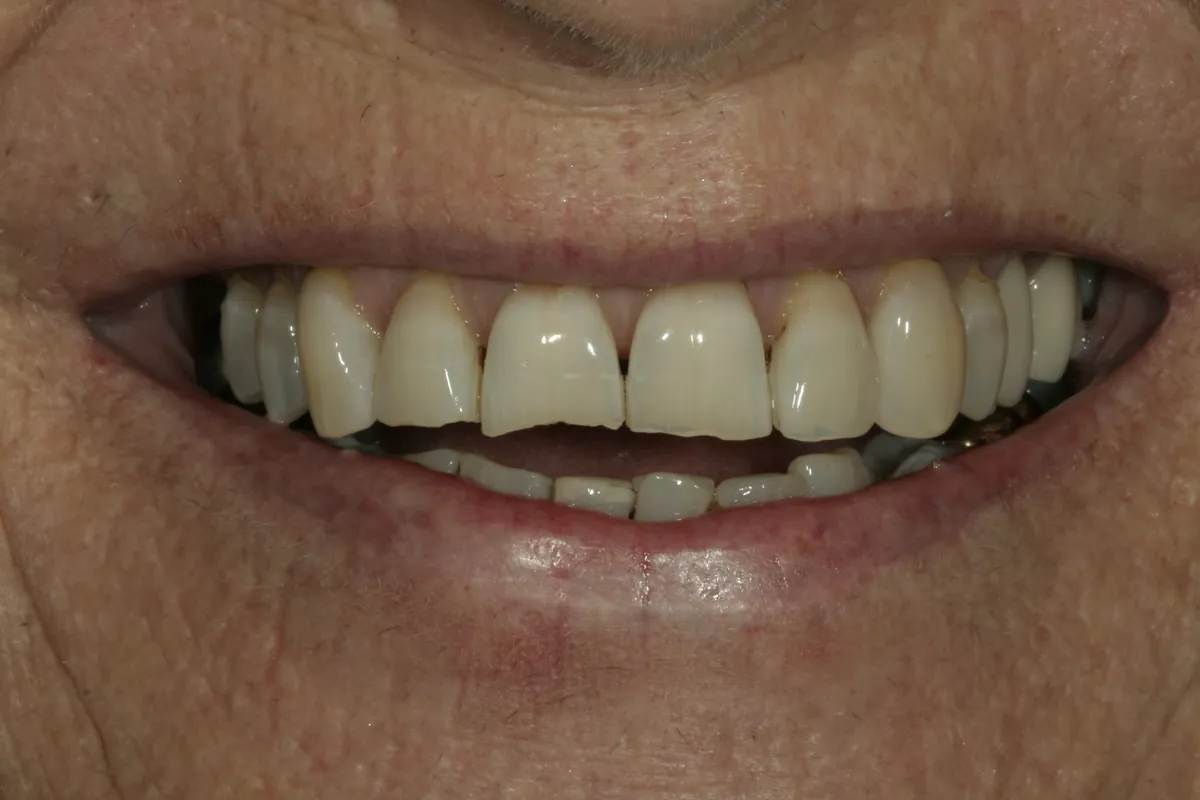
Before. The edges of the upper front teeth have broken back unevenly.
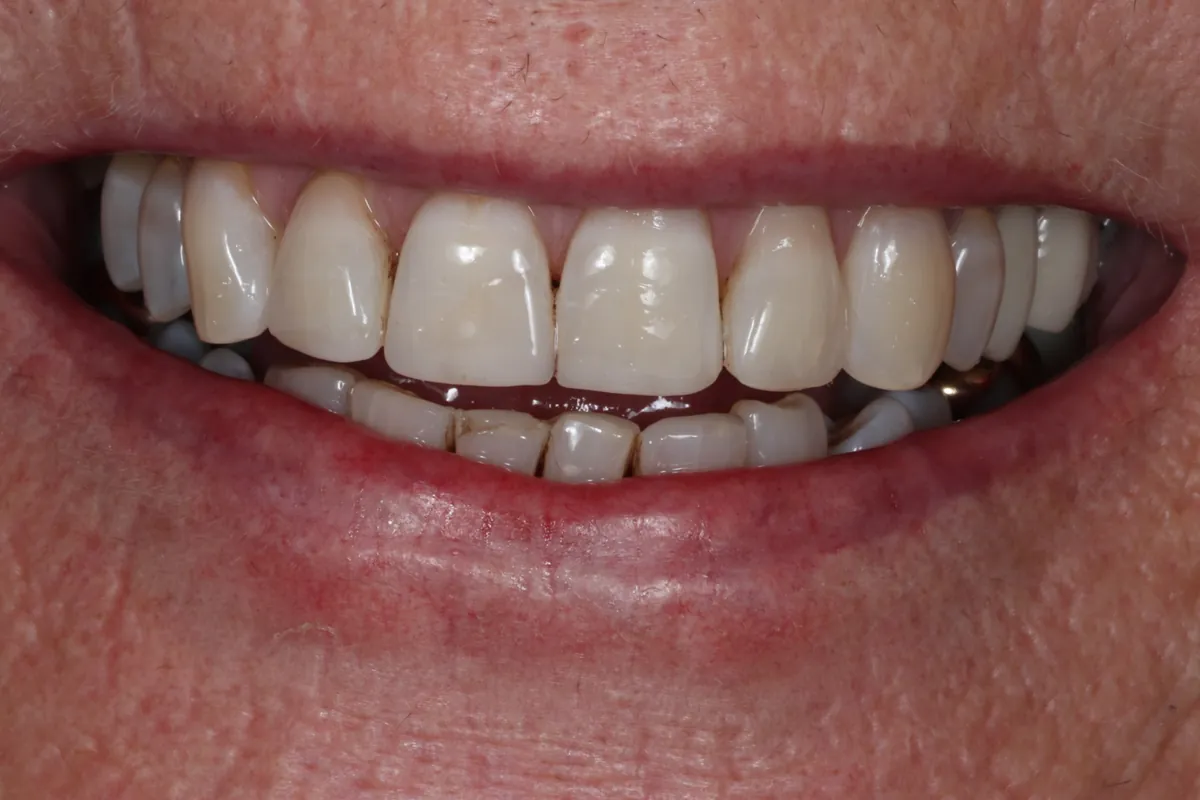
After. Shape and length rebuilt with composite bonding on the front four, with no tooth structure removed.
See K.G.’s case in the gallery →
Edges after Invisalign: J.C.
J.C. wanted a better smile, but she wanted to get there conservatively. Invisalign moved her teeth into position first. Then bonding on the edges of her four front teeth finished the job.
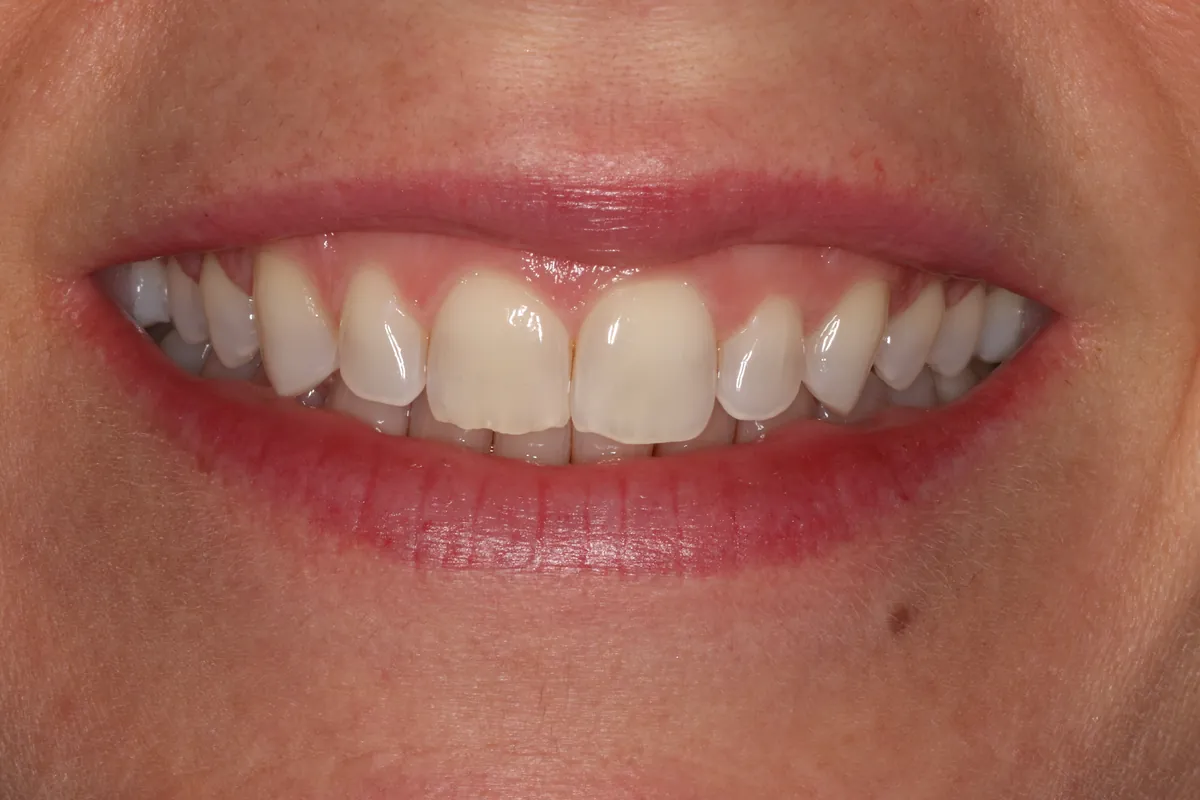
Before.
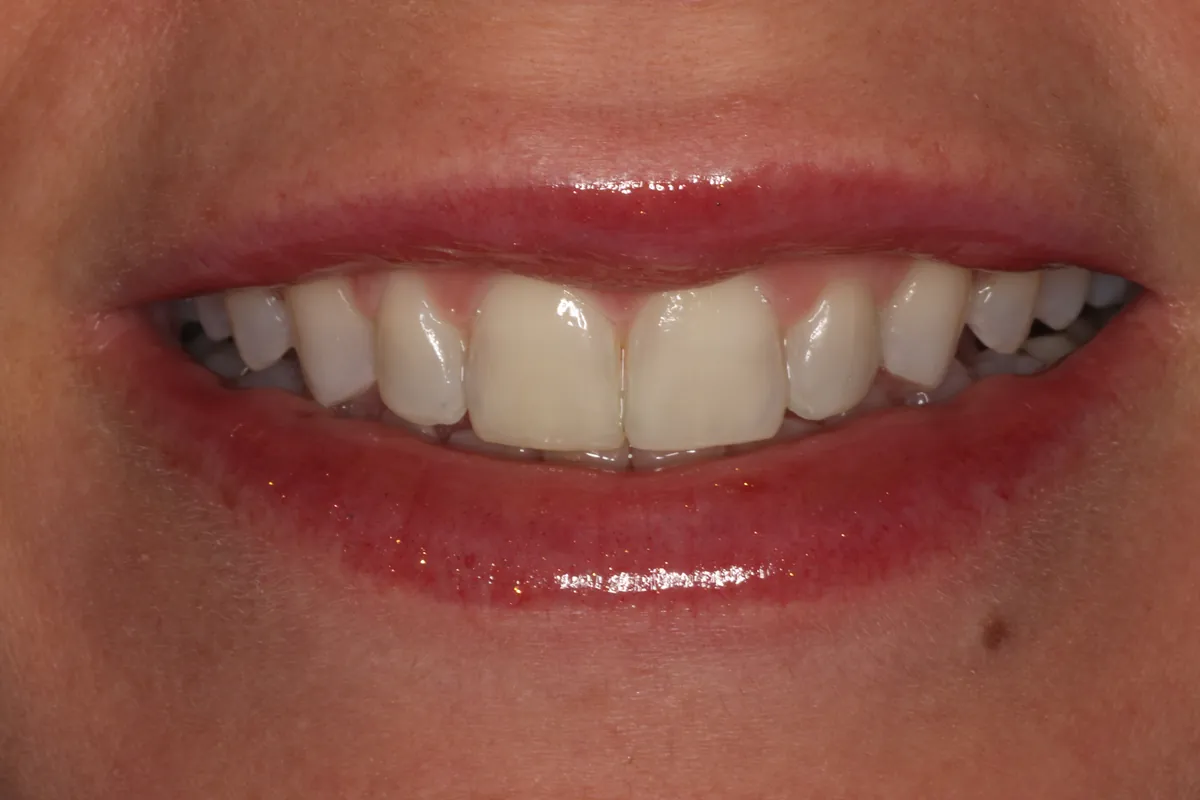
After. Aligners moved the teeth first and composite then rebuilt the edges, so not every difference here is the bonding.
See J.C.’s case in the gallery →
Bonding during orthodontics: N.B.
N.B.’s front teeth were crowded, and their edges were chipped and uneven. We worked with his orthodontist and bonded his front six teeth during treatment, so the teeth had their final shape while they were being moved and could be put in the correct place by the time the braces came off.
His teeth were worn enough that we bonded the inside surfaces too, not just the fronts and edges. Ideally he’d have crowns, and we told him so. But the bonding is working for him right now, and it keeps that option open for later.

Before. Crowded teeth with chipped, uneven edges.
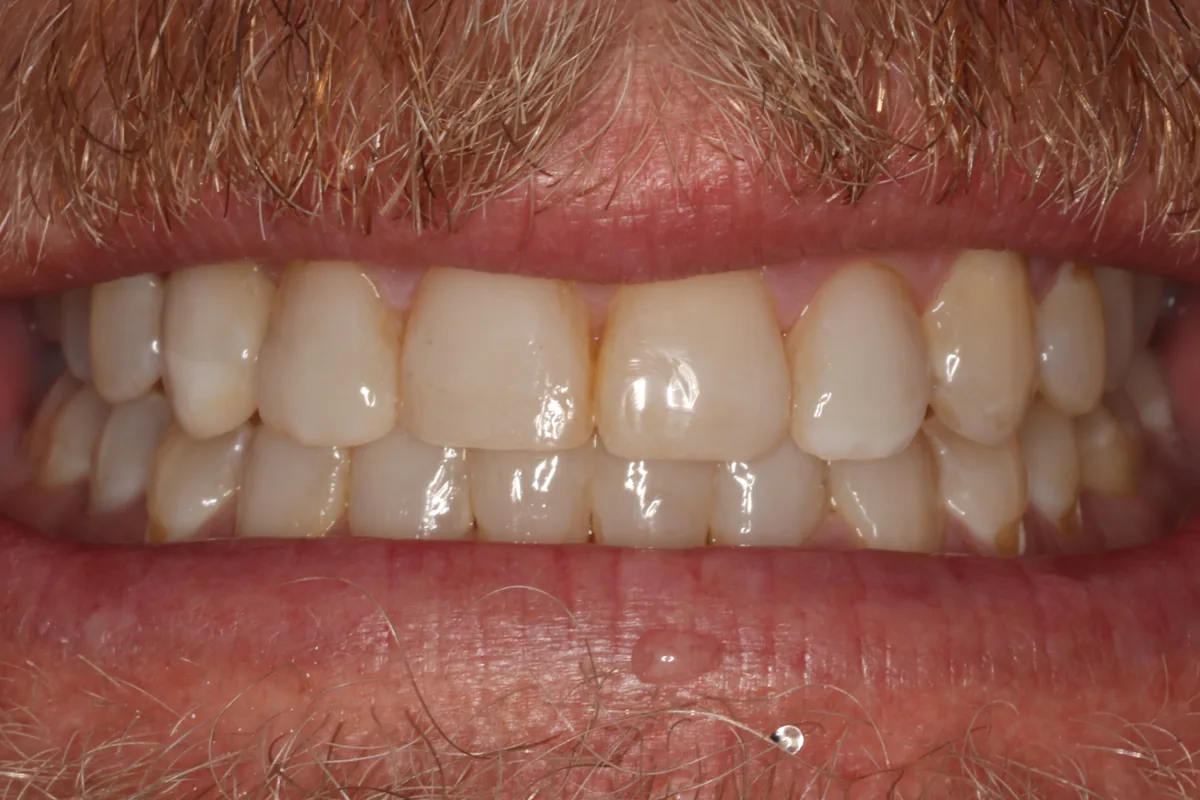
After. Front six teeth bonded during orthodontic treatment, then moved into place. Not every difference here is the bonding.
Dark triangles after braces: E.C.
Braces had straightened E.C.’s teeth but left dark triangular gaps near the gumline that showed every time she smiled big. Since the orthodontic work was already done, bonding filled those spaces without removing any tooth.
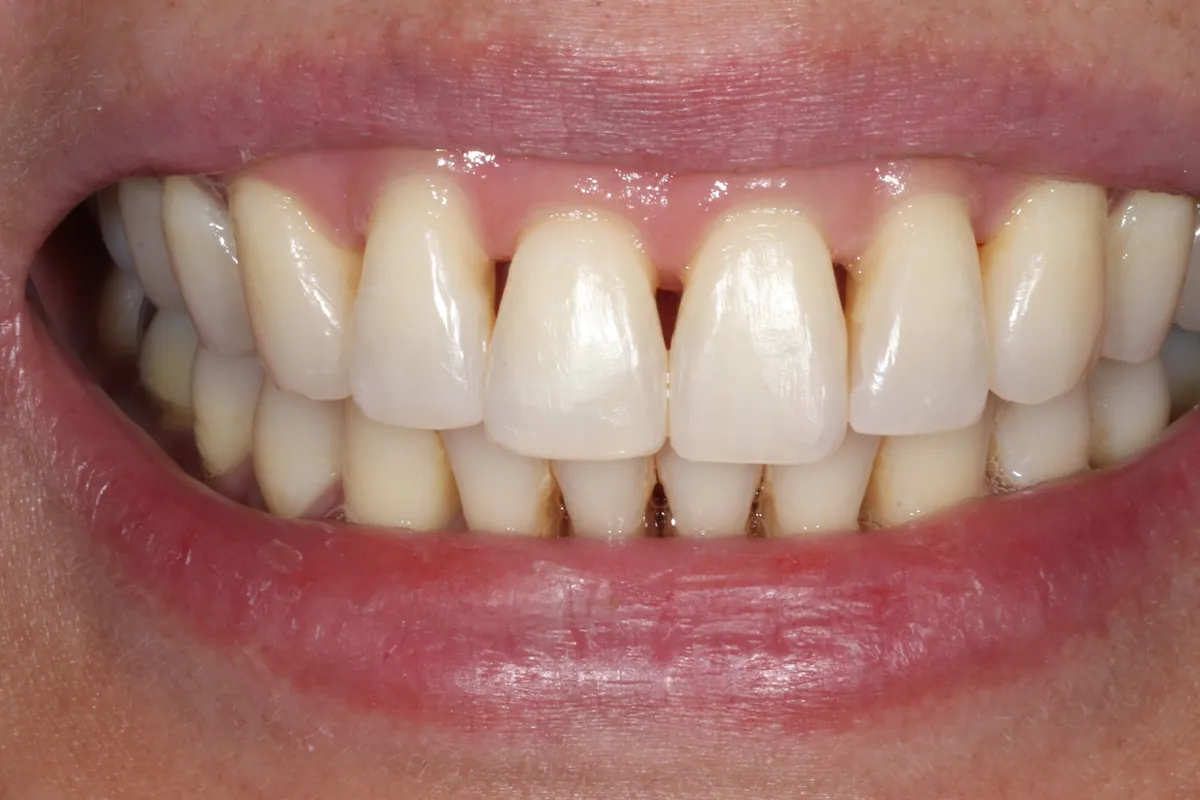
Before. Straight teeth, but dark triangles between them near the gums.
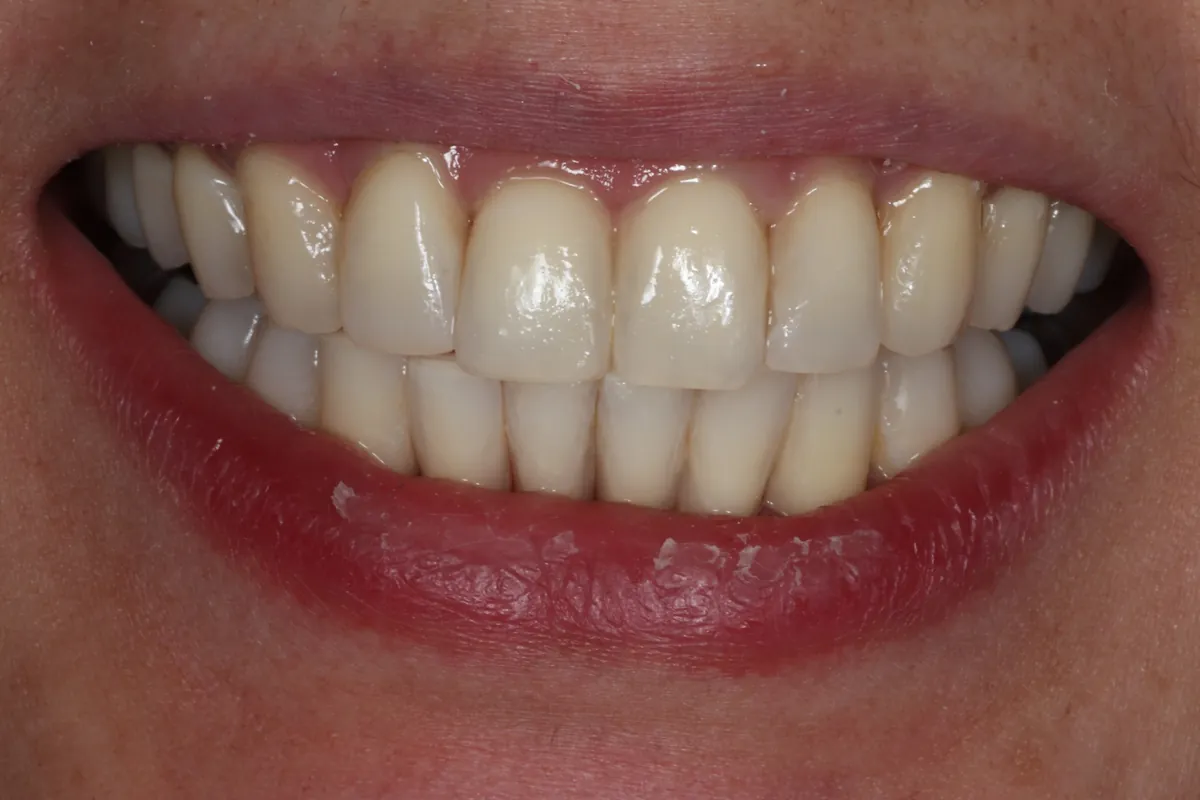
After. The spaces filled with composite bonding, with no tooth structure removed.
See E.C.’s case in the gallery →
Whitening first, then new bonding: R.S.
R.S. whitened his teeth with KöR. The rest of his teeth got lighter, but the old bonding on his two front teeth didn’t, because composite doesn’t whiten. So after whitening, we redid the bonding to match his new shade.
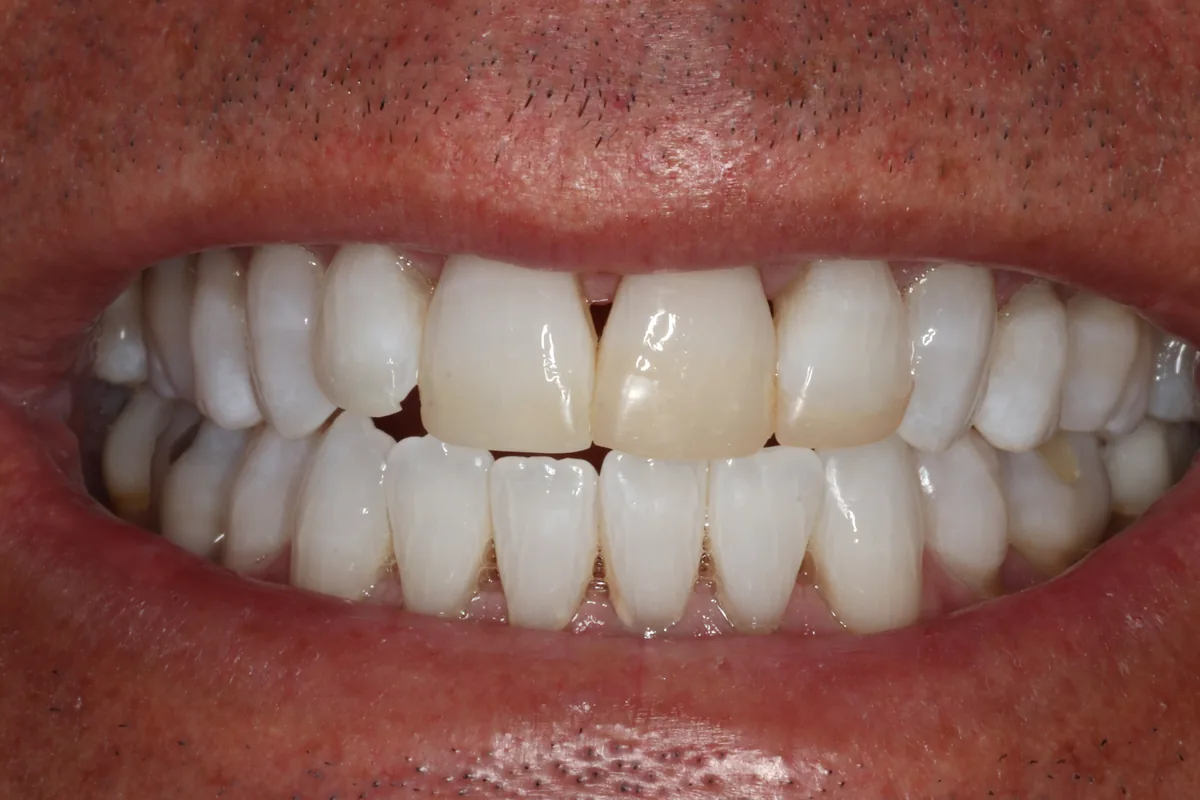
Before. Whitening lightened his natural teeth, and the old bonding on the two front teeth stayed the color it was.
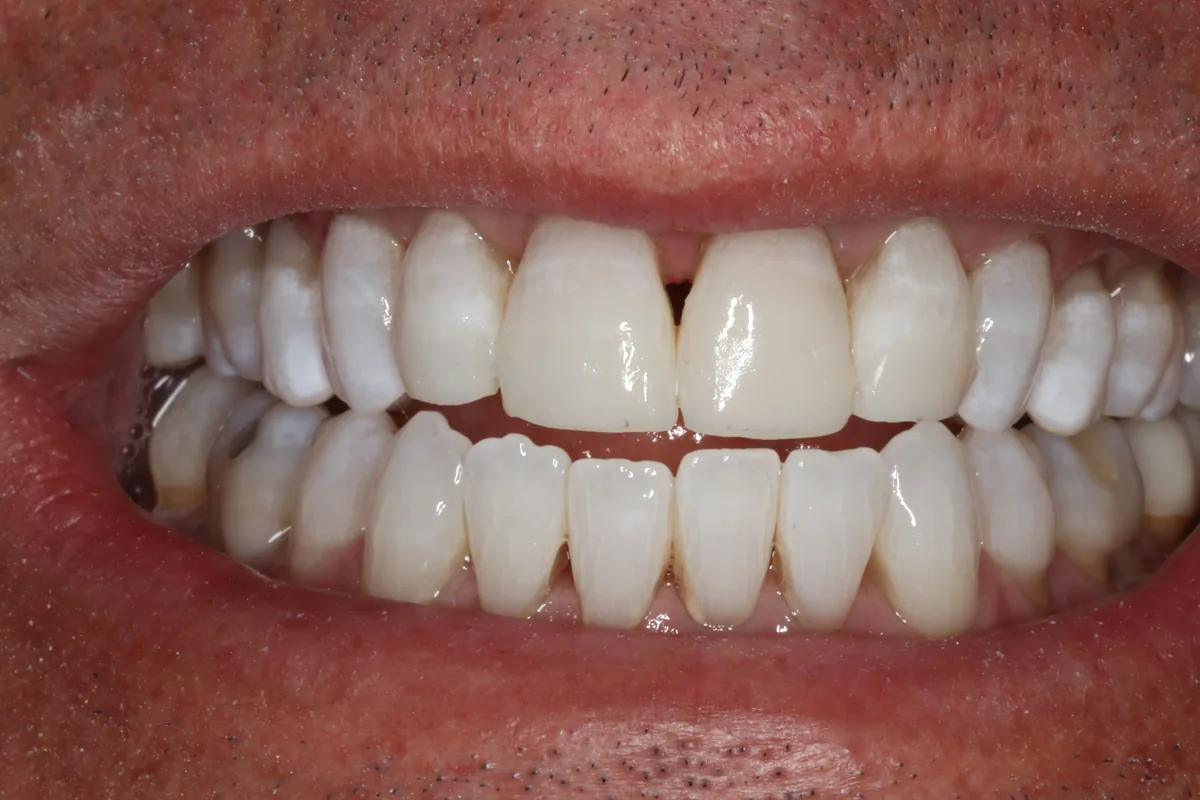
After. New bonding matched to his whitened shade, the same day.
Composite veneers: L.C.
Composite can also cover the whole front of a tooth, as a composite veneer. We don’t do them often, because porcelain keeps its color and shine longer, but there are times they’re the right decision. L.C. was unhappy with how her front teeth looked and had medical treatment on the horizon. Given her situation, composite veneers were the best option, and they gave her a smile she could be proud of.
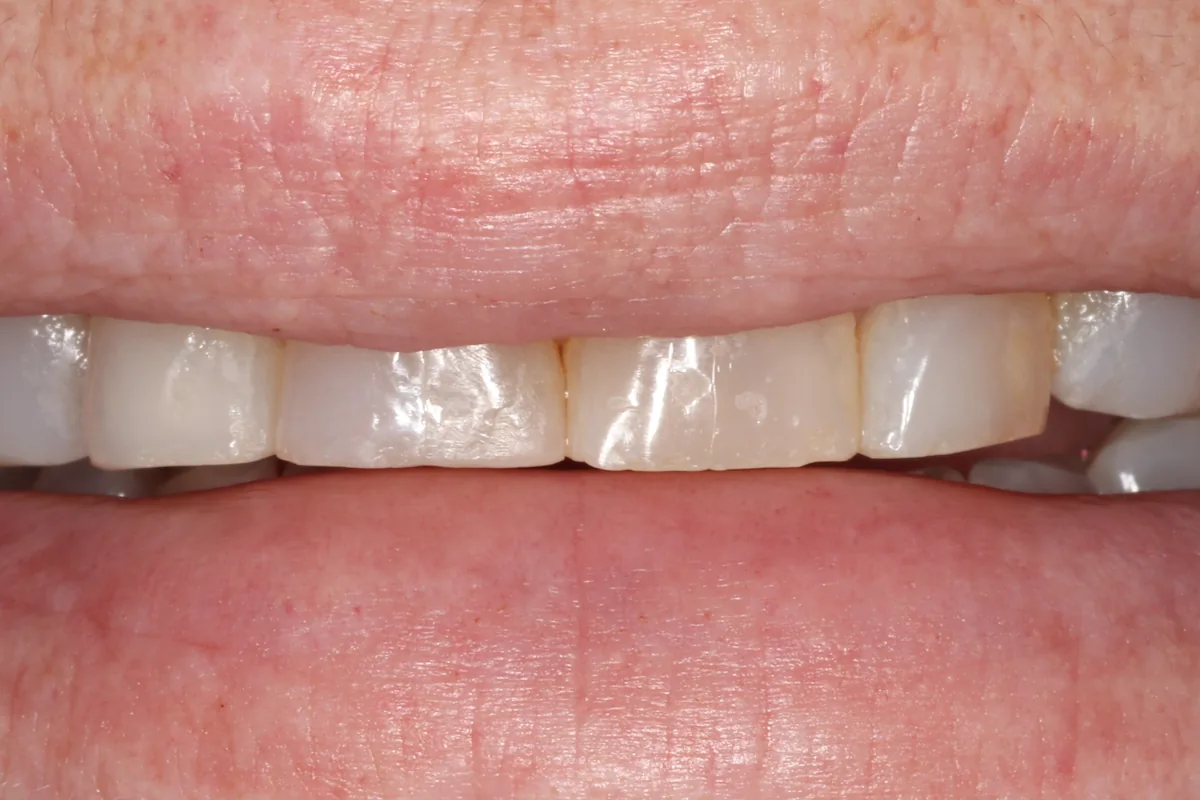
Before.
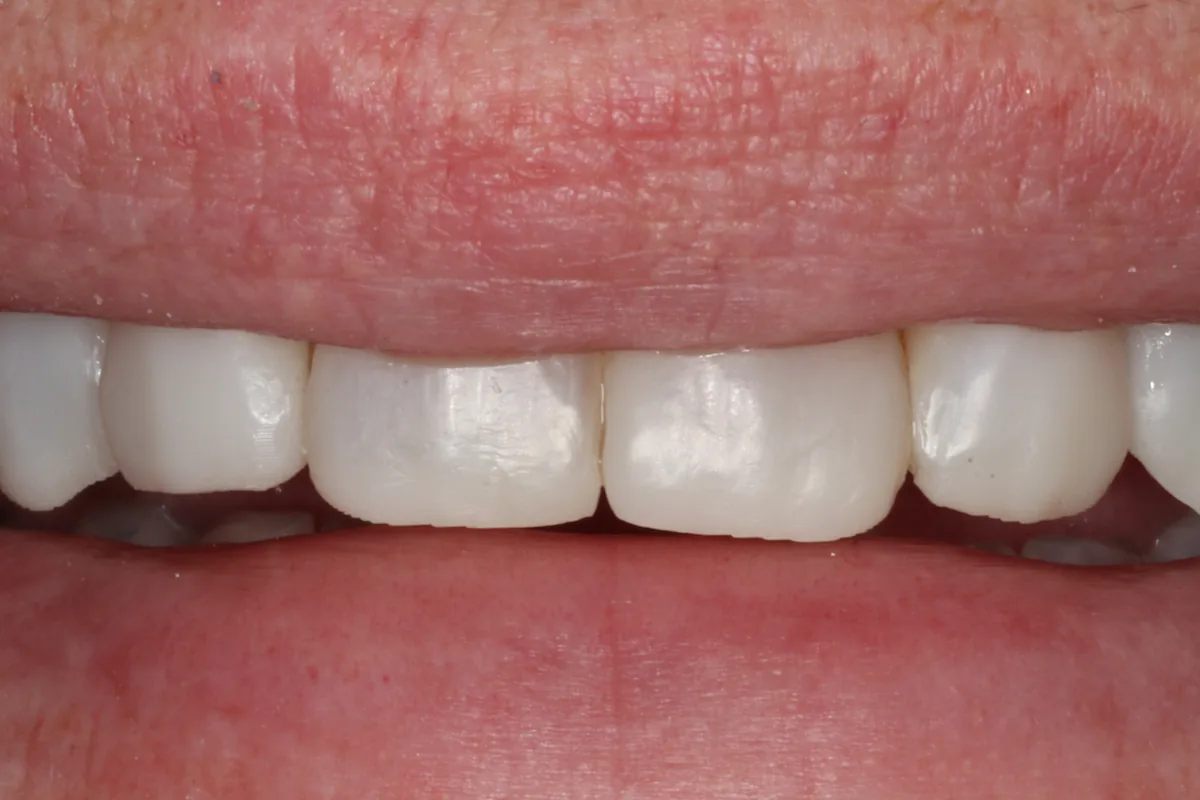
After. Composite veneers on her upper front teeth.
Bonding as part of a bigger plan
Bonding doesn’t have to be the whole plan to be the right part of it.
D.P. had lost several millimeters of tooth to wear and showed almost no teeth when she smiled. Ceramic restorations rebuilt the top teeth, and composite bonding rebuilt the bottom.
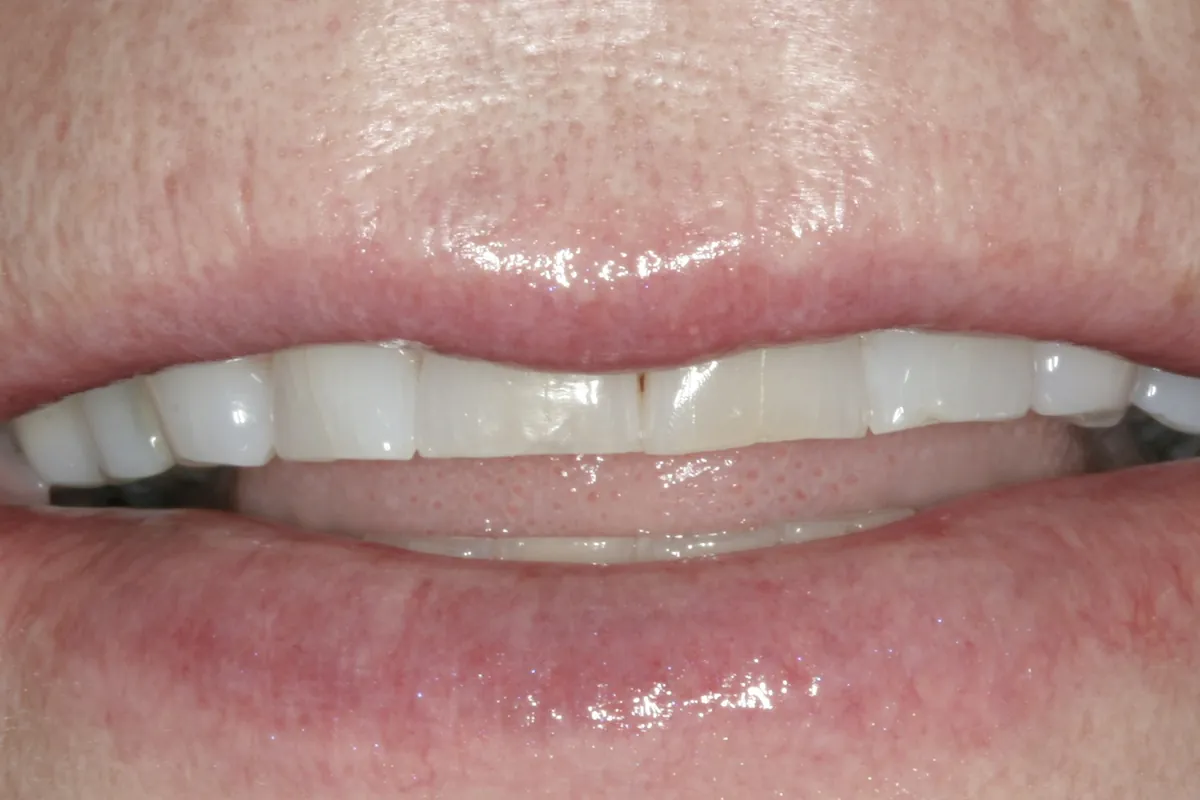
Before. Worn teeth that barely showed.
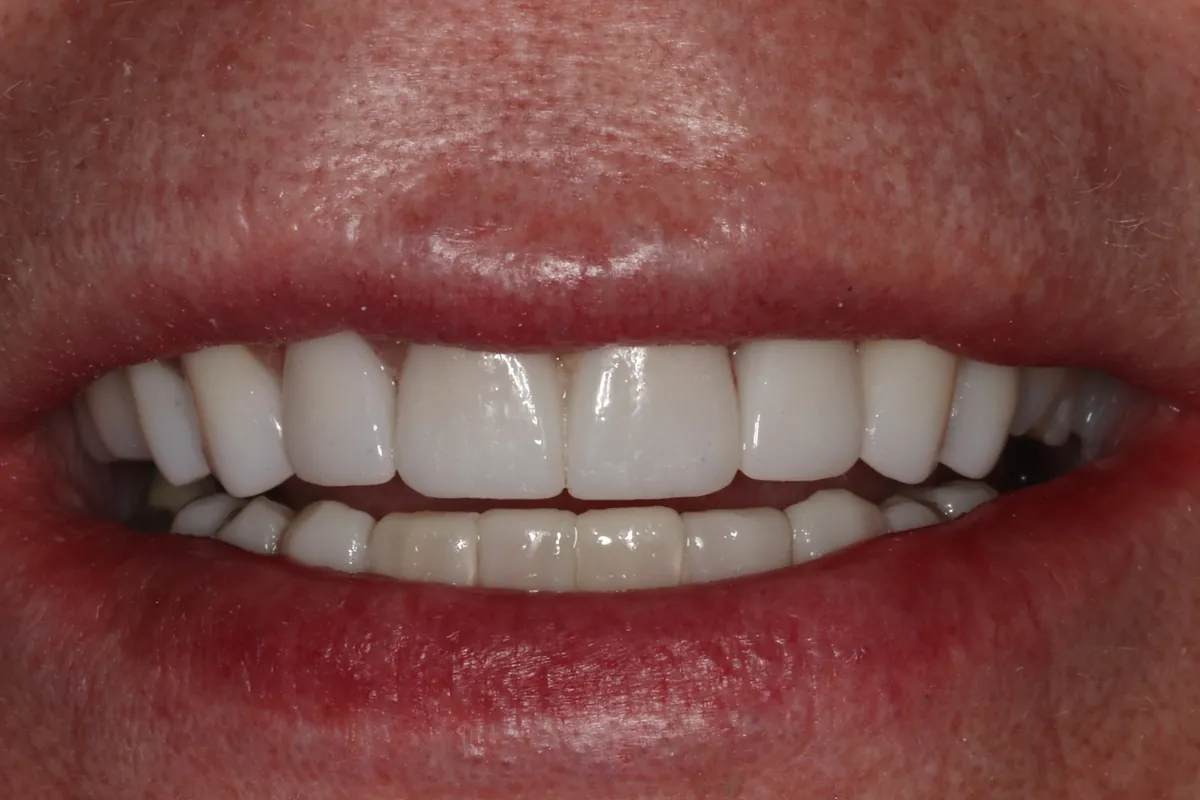
After. Ceramic on top, composite bonding on the bottom.
See D.P.’s case in the gallery →
Y.M. had an eye tooth replaced abroad and didn’t like the dark space that had developed beside it. Moving the teeth slightly, then composite bonding and a new bridge, closed it out. Sometimes it’s just a few teeth. See Y.M.’s case →
When bonding isn’t the answer
J.L. was referred to us to have the spaces between her front teeth bonded. The exam found two things driving the gaps: front teeth that were slightly loose from gum disease treated years earlier, and a tongue thrust pushing them forward. A gum specialist confirmed things were healthy, myofunctional therapy took care of the tongue thrust, and Invisalign closed the spaces. She didn’t need bonding at all.
See J.L.’s case in the gallery →
Bonding can also reach its limit. L.G. had bonding on her two front teeth that had darkened over the years, and the teeth beside them were crooked. Ceramic restorations on the top and bottom front teeth handled both at once. See L.G.’s case →
Bonding or veneers?
- Bonding is added to the tooth without removing any, is often done in one visit, and can be repolished, repaired and added to in the chair. It’s the usual answer for small chips, small gaps and edges.
- Porcelain veneers keep their color and shine longer. They’re for deep staining inside the tooth, bigger changes in shape or length, and teeth that bonding can’t handle. They usually take some reshaping of the tooth and at least two visits.
- Crowns are for teeth where too much is gone for bonding or a veneer to hold.
For a lot of cases the answer is bonding, and we’ll tell you if it is. Here’s the order we plan cosmetic work in.
How long does bonding last?
It varies a lot from mouth to mouth. A review of 17 studies of composite on front teeth, each following patients for at least three years, found yearly failure rates from 0% to about 4%. A broken tooth or broken bonding was the most common reason, and bonding placed purely for looks was more likely to be redone for looks, such as color or staining.
Demarco FF, Collares K, Coelho-de-Souza FH, Correa MB, Cenci MS, Moraes RR, Opdam NJ. Anterior composite restorations: a systematic review on long-term survival and reasons for failure. Dent Mater. 2015;31(10):1214-1224.
Two things work in bonding’s favor. When it chips or stains, it can usually be repaired or repolished instead of replaced. And when the cause has been dealt with, there’s less trying to break it in the first place.
Getting started
Bring in the tooth that’s bothering you. We’ll look at why it chipped or why the gap is there, tell you whether bonding is the right fix, and go over the plan and cost. Call 702-734-0776 or tell us what’s going on.