

You can’t find the real solution to a dental problem without first seeing it clearly. That’s the whole reason technology matters here. It isn’t an add-on service, it’s how we find the actual problem in your mouth before we recommend a treatment.
X-Rays, Photos and a 3D Scan
Every patient gets digital X-rays, photographs of their teeth and a 3D iTero scan as part of a real exam. There’s no stripped-down version of it. The photos and the scan work together: the scan gives us precise, measurable data on how your teeth and bite actually fit, and the photos give us the visual picture to match against it. That’s what lets us plan anything from Invisalign to a crown to a veneer with real precision instead of a guess.
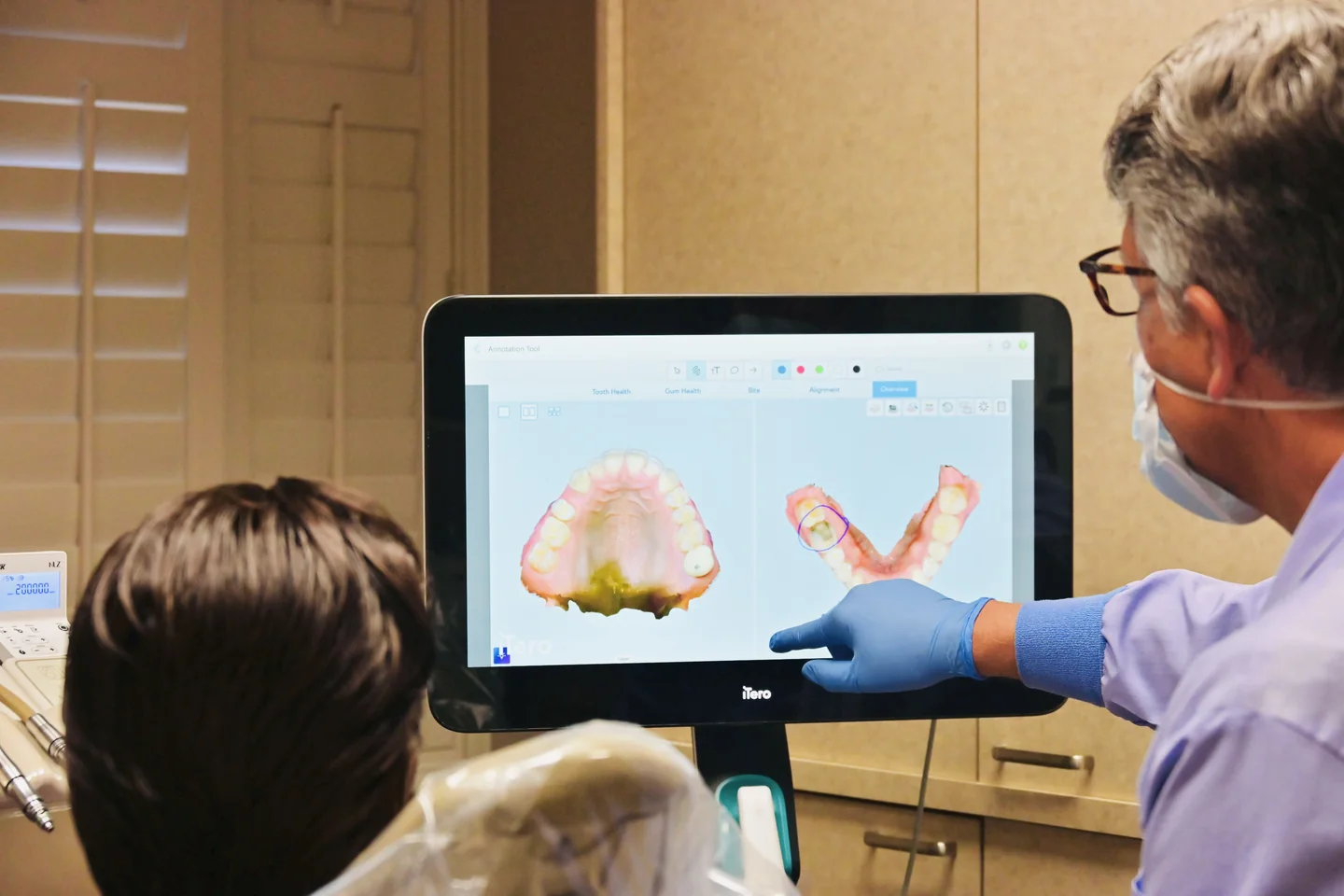
The scan on the screen beside the chair. You see it at the same moment we do, and we go through it together.
Digital X-Rays
Digital X-rays let us see decay between teeth, bone loss from gum disease, and problems below the gumline long before they’d be visible or symptomatic. They use less radiation than traditional film X-rays, and the images come up instantly, so we can go through them with you chairside.
The 3D iTero Scan
The iTero scanner takes a digital 3D record of your teeth and how your bite comes together, with no tray and nothing to gag on. Because it’s measurable, we can compare this year’s scan against last year’s and see what has actually moved or worn, rather than relying on memory.
It’s also what Invisalign treatment is planned from, and what we use to design crowns and veneers.
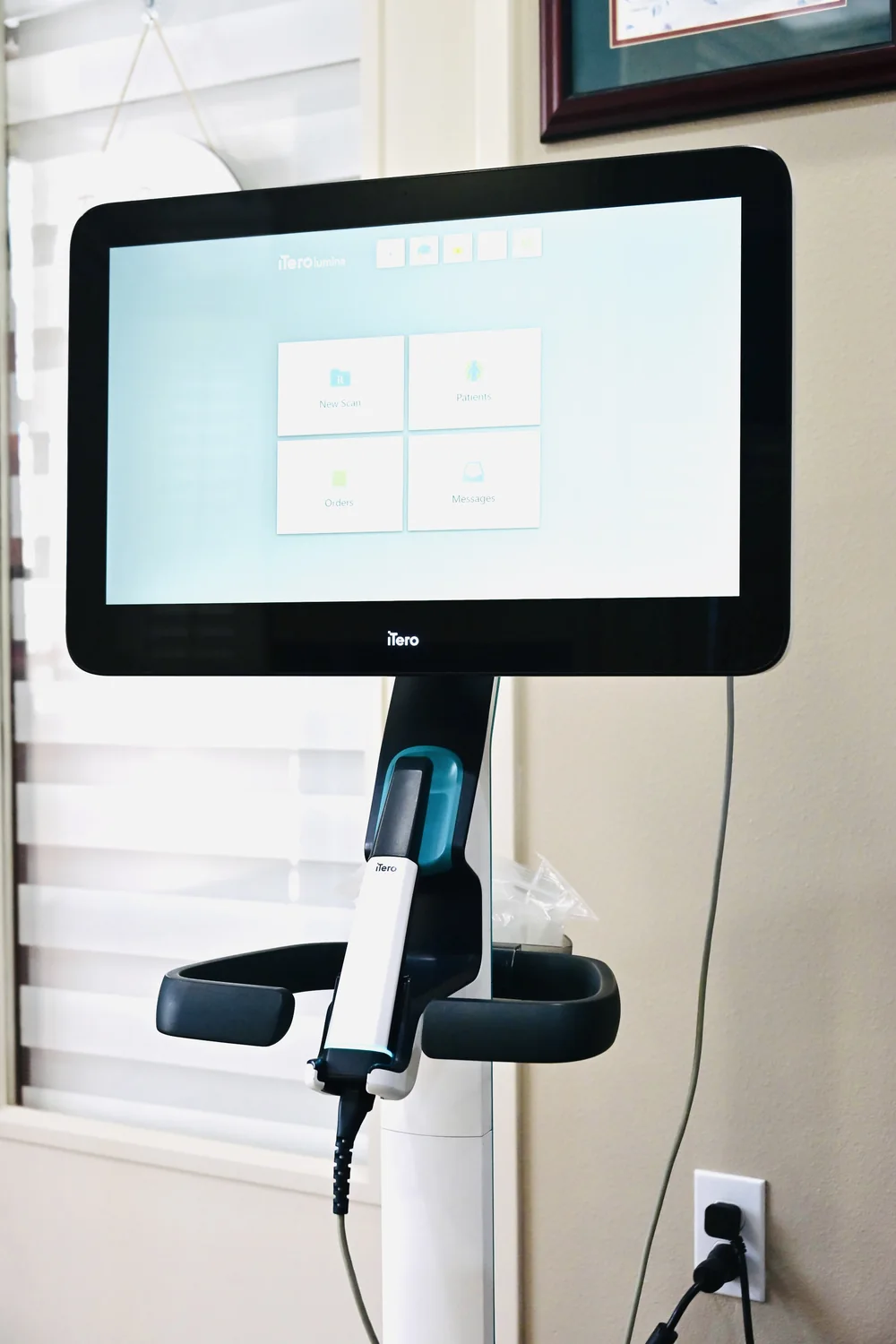
The scanner lives in the operatory. The wand goes around your teeth and the model builds on the screen as it goes.
3D CBCT Imaging, Only When It’s Indicated
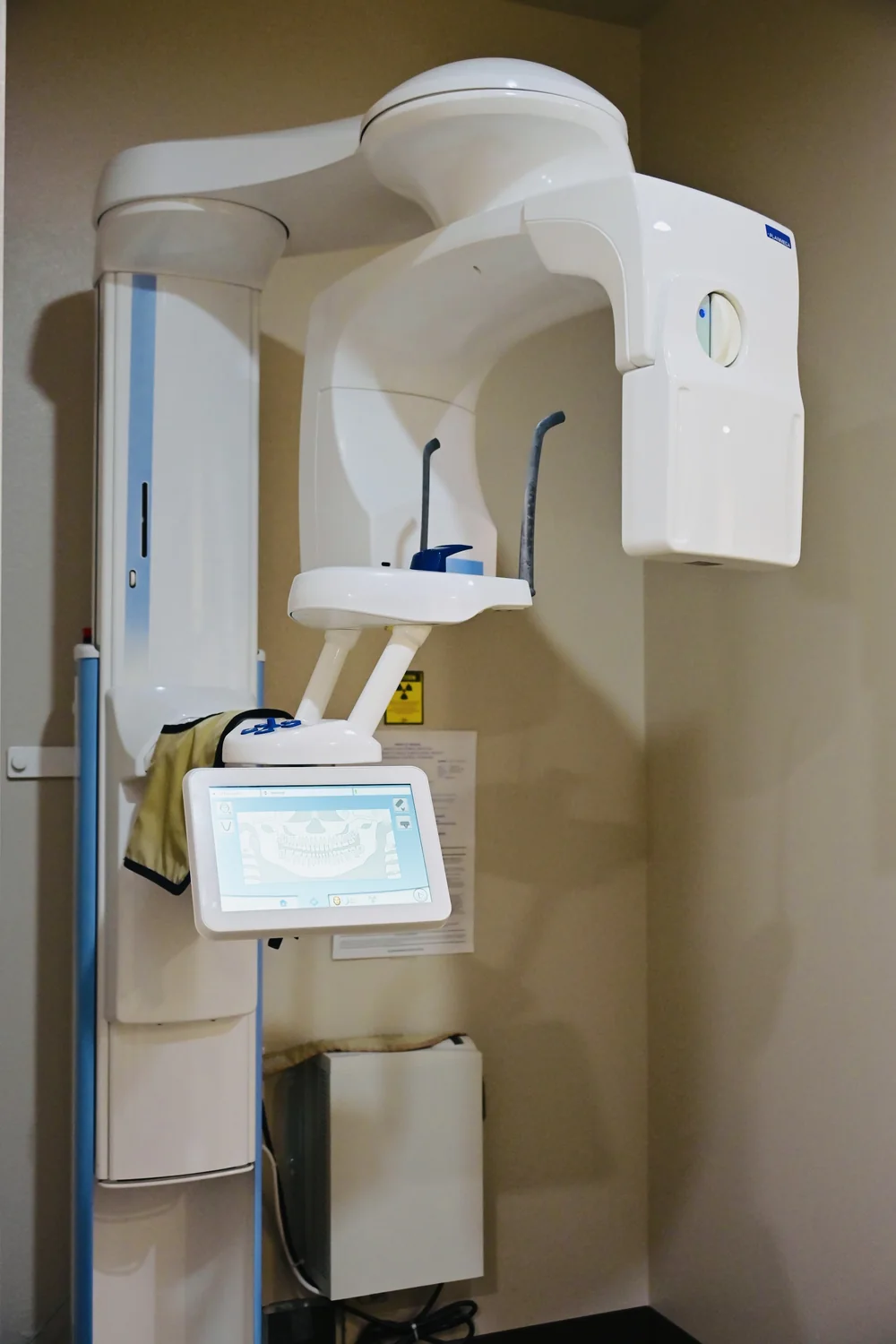
CBCT is a more detailed 3D X-ray that shows bone, nerves and joint structures a standard X-ray or scan can’t. It isn’t part of a routine visit. We take one when there’s a specific question it can answer, and that’s usually one of three:
- Planning a dental implant, where we need to see the bone in three dimensions before anything is placed.
- Working out what’s happening at the jaw joint in a TMJ case.
- Checking whether a tooth has a problem inside it that a root canal would address, when a regular X-ray doesn’t settle the question.
If none of those apply, you don’t need one, and we won’t take one.
Every CBCT we take is also read by specialists. We send each scan to BeamReaders, a service of oral and maxillofacial radiologists, who review the whole scan and send us a written report. A CBCT captures much more than the tooth or joint we were asking about, including the sinuses, the airway and the surrounding bone. Having a radiologist read all of it means something unexpected outside the area we were looking at doesn’t go unnoticed.
How often we take all this
- Digital X-rays: once a year. They’re included in our Optimal Dental Health Program.
- 3D iTero scan: once a year, so we have a fresh record to compare against.
- Photographs: updated as needed, when something has changed or we’re planning treatment.
- CBCT: only when it’s indicated, for the three situations above, and always read by a radiologist.
Your first visit is where we take the full set, so there’s a baseline to measure everything against in the years ahead.
The goal of all of this is simple: catch problems earlier, explain them more clearly, and plan treatment more precisely, so the solution actually fits the problem we found.
Where This Shows Up in Your Care
We look at your teeth and gums at every cleaning, and the yearly X-rays and scan are what tell us whether anything is quietly changing. The same records are what we plan Invisalign and cosmetic work from. CBCT stays on the shelf unless your case actually calls for it.