

People usually come in having already picked the answer: veneers, or bonding. Sometimes they’re right. Sometimes the better answer is the smaller one. And sometimes, once we find out why the problem is there, it’s neither.
Key points
- Bonding adds tooth-colored composite to the tooth instead of cutting into it. It’s often right for a chip, a small gap or an uneven edge.
- Modern composites hold up well. Seven to ten years is a reasonable expectation, though it can be shorter.
- Veneers make sense when teeth need to be made larger, when there are a lot of old fillings, or when you want a general change in color.
- A gap or a chip has a cause. Finding it first is what lets the fix be small, and makes it last.
- Comprehensive doesn’t mean more dentistry. It means the right amount.
Start with why
Teeth that drift apart are being pushed by something. Edges that chip are taking a load they weren’t built for. If we bond over a gap that’s still being pushed open, or rebuild an edge that’s still being overloaded, the new work tends to fail the same way the tooth did.
That’s why every cosmetic case here starts with a full exam: how your teeth meet, where the wear is, the health of the gums and bone, and habits like a tongue thrust. It sounds like the long way around. Often it’s what makes the short answer possible.
When bonding is enough
Bonding is tooth-colored composite added to the tooth and shaped by hand. Because we’re adding rather than drilling, it usually doesn’t need numbing, and a chipped edge is often done in one visit.
- A chipped or broken corner, rebuilt to its old shape.
- Small gaps, once we know nothing is still pushing the teeth apart.
- Uneven or worn edges, including the finishing touches after Invisalign.
How long it lasts. Modern composites hold up well, usually without needing to be repolished, and seven to ten years is a reasonable expectation. It can be shorter, especially on teeth that take a lot of force. Porcelain keeps its color and shine longer.
G.F.: one corner, one visit


G.F. had broken a corner off a front tooth. We rebuilt it with composite bonding at a single visit. The before and after photos were taken 16 minutes apart. See G.F.’s case →
When veneers are the right call
Bonding isn’t always the right tool. Veneers are usually the better option when:
- The teeth are too small for the space. When teeth need to be made larger to fill the spaces, and closing the spaces with braces or aligners would narrow the arch too much, veneers can add the size instead.
- There are a lot of old restorations. Front teeth with many old fillings don’t leave much sound tooth for bonding to hold onto.
- You want a general change in color. Bonding is matched to the teeth around it. When the goal is a lighter, even shade across the smile, porcelain does that and holds it.
Most porcelain veneers last well past ten years. How long veneers last, and what makes them fail.
When you need neither, or both
Some of the best results in our gallery came from moving the teeth first, so that less, or nothing, had to be added.
J.C.: move first, then bond the edges
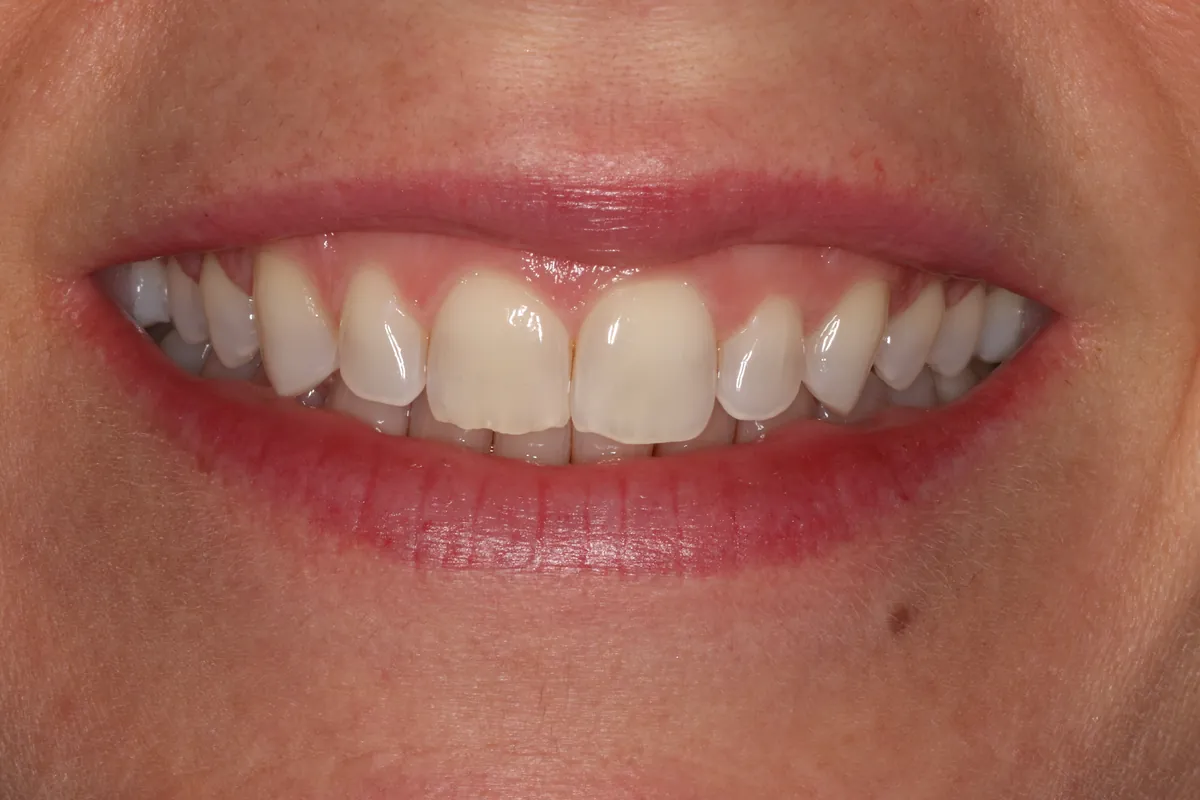
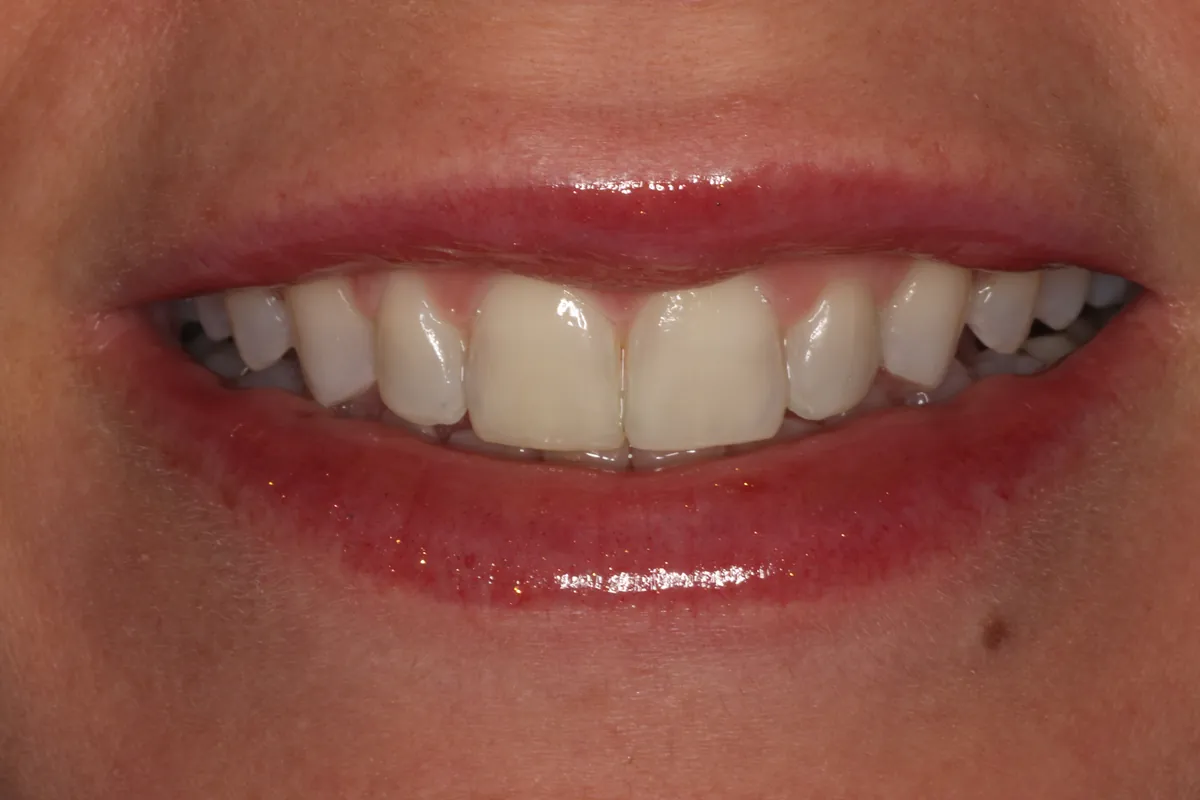
J.C. wanted a better smile, but conservatively. Invisalign moved her teeth into position first, then bonding on the edges of her four front teeth finished it, with no tooth structure removed. See J.C.’s case →
J.L.: sent in for bonding, finished without it
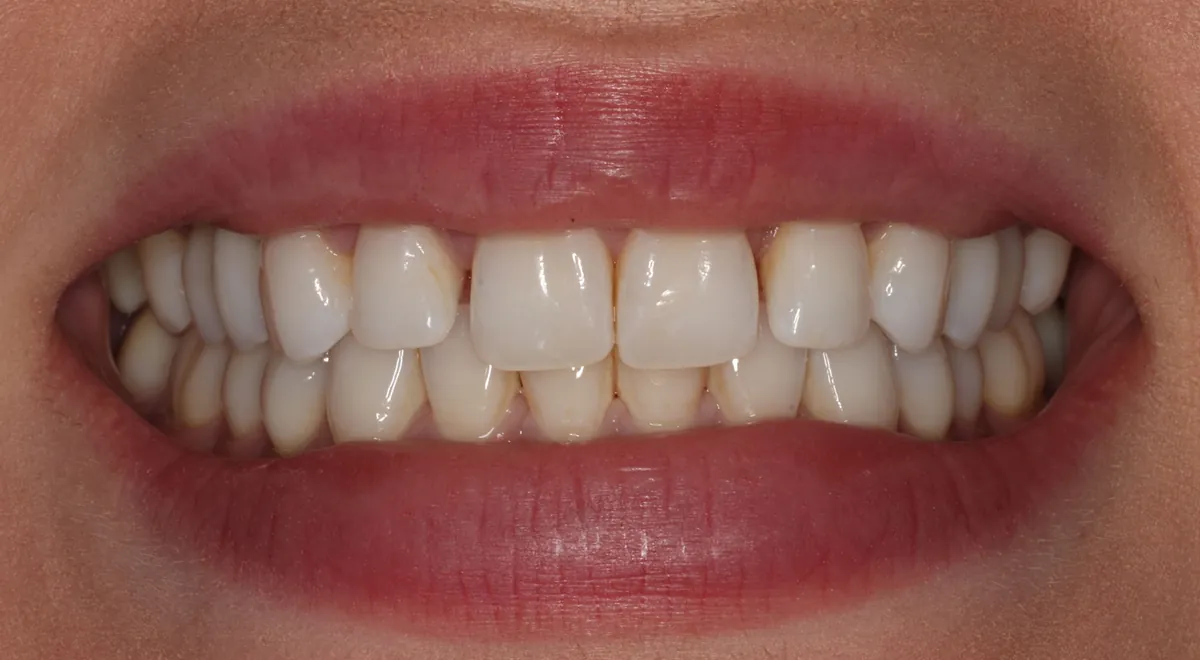
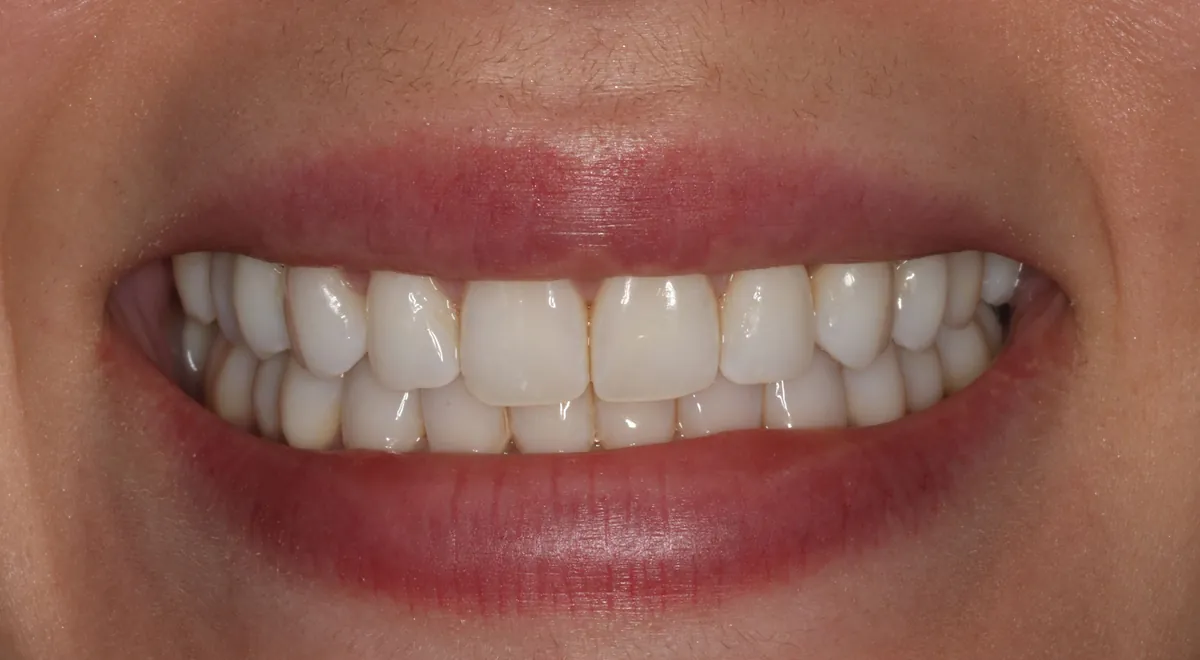
J.L. was referred to us to bond the spaces between her front teeth. The exam found her front teeth were slightly loose from gum disease that had been treated before, and a tongue thrust habit was pushing them apart. A periodontist confirmed her gums were healthy after treatment, myofunctional therapy resolved the tongue thrust, and Invisalign closed the spaces for good. No bonding was needed. See J.L.’s case →
J.L. is what we mean by comprehensive. The exam didn’t lead to more treatment. It found the reason for the gaps, and fixing the reason meant the teeth stayed closed without anything added to them.
Side by side
| Bonding | Porcelain veneers | |
|---|---|---|
| What it is | Composite added to the tooth and shaped in the chair | Thin porcelain made by a lab and bonded to the front of the tooth |
| Tooth removed | Usually none | Usually a little reshaping, to make room for the porcelain |
| Visits | Often one | At least two, usually two to four |
| How long | Seven to ten years is reasonable, sometimes shorter | Most last well past ten years |
| Best for | Chips, small gaps, uneven edges | Teeth that need to be larger, many old fillings, a general color change |
Moving the teeth first with Invisalign can shrink either one, or remove the need entirely.
Not sure which you need?
Most people can’t tell from a mirror, and they shouldn’t have to. A comprehensive exam shows why the chip, gap or color is there and what will hold up. Sometimes that’s a single bonding visit. More on bonding. More on porcelain veneers.
Call 702-734-0776 or tell us what’s going on.
General education, and not a substitute for an exam.