

Run a fingernail along your teeth where they meet the gum, and on some teeth it catches on a small ledge. Sometimes it’s sharp. Sometimes that’s the spot that stings with cold water, or the spot you’ve been brushing extra hard because it looks a little dark.
That ledge is a notch, and it means tooth is being lost right at the gum line. Dentists often call it an abfraction. The broader term is a non-carious cervical lesion, which only means tooth lost at the neck of the tooth without decay causing it.
It’s very common, it’s usually painless apart from some sensitivity, and it rarely has just one cause. The shape and the pattern of the notches tell us a lot about which causes are at work, which is what this page is about.
It usually starts with recession
Above the gum, a tooth is covered in enamel, the hardest thing your body makes. Below the gum, the root has no enamel at all. It’s made of softer material full of microscopic tubules that lead to the nerve.
When the gum pulls back, that root surface is exposed to everything going on in your mouth. Recession is usually on the outside of the tooth, the cheek side, and that’s where most notches form.
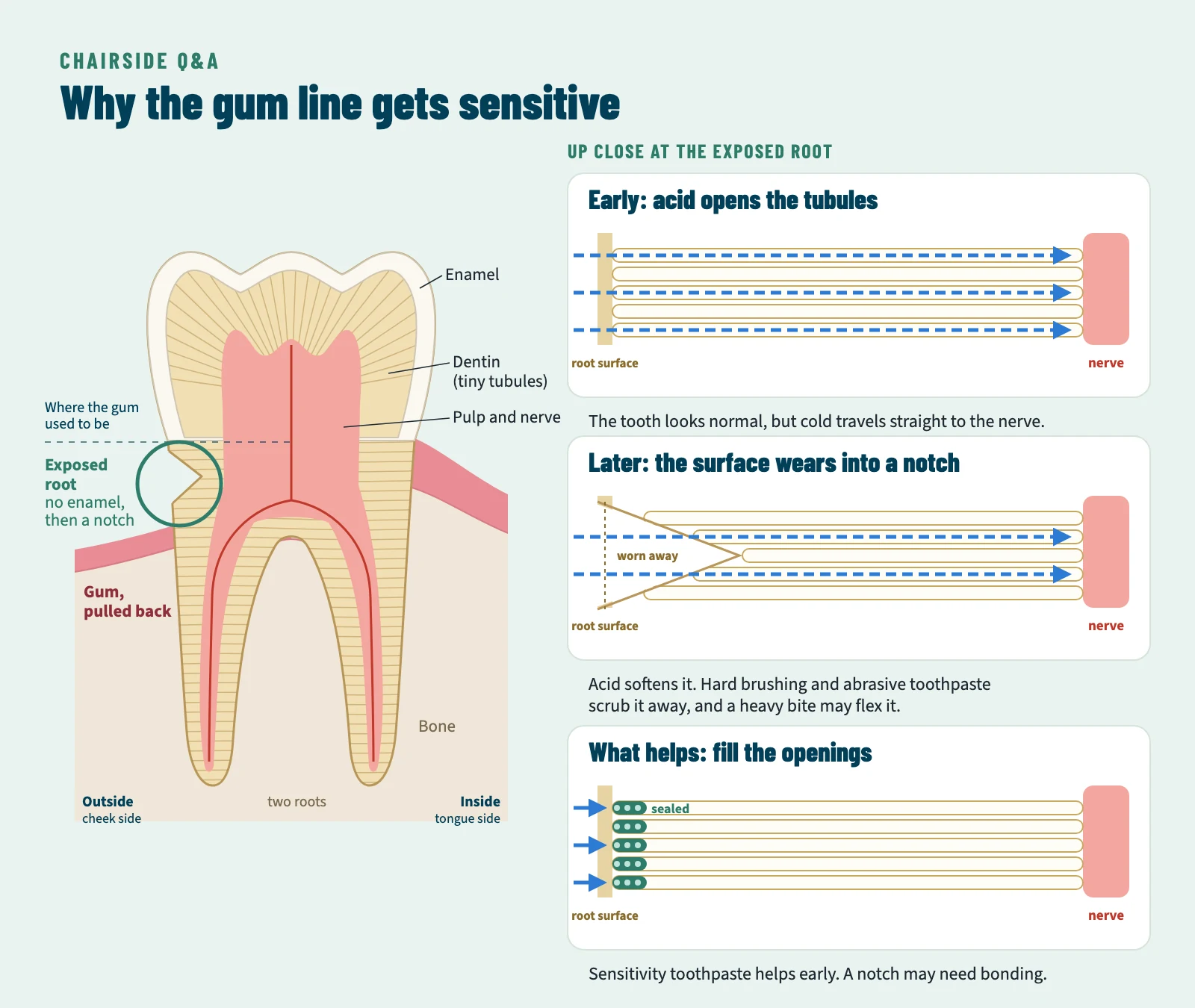
Two stages: open tubules, then lost tooth
Early on, nothing is actually missing. Acid at the surface cleans out the openings of the tubules, and the root can look completely normal while cold goes almost straight to the nerve. This is the stage where teeth are sensitive but look fine, and where a sensitivity toothpaste does its best work, because all it has to do is fill tiny holes. The quick answer on gum-line sensitivity is here.
If the acid keeps coming, the surface itself starts to go. Softened root wears away much more easily than sound tooth, and over months and years that becomes the notch. Once tooth structure is gone, toothpaste can calm the sensitivity, but nothing you do at home will put the tooth back.
What wears the notch
Three things are usually involved, and in most mouths it’s some combination of them rather than one alone.
- Acid. Enamel starts to dissolve below about pH 5.5. Exposed root gives way earlier, around 6.2 to 6.5, so it loses ground to acid long before enamel does. Soda, sports drinks, lemon water, reflux and a dry mouth all bring the pH down. Where that acid comes from is covered in full here.
- Abrasion. A stiff brush, heavy pressure and an abrasive toothpaste all scrub away root that acid has already softened. Whitening toothpastes are abrasive, so they can make a notch worse, and they work against sensitivity toothpaste, whose whole job is to fill those tiny openings.
- The bite. It’s theorized that heavy biting forces flex the tooth at its neck, and that the flexing helps the notch along. That part is still debated. What we can say is that the pattern of notches in some mouths is hard to explain by brushing alone.
Reading the pattern
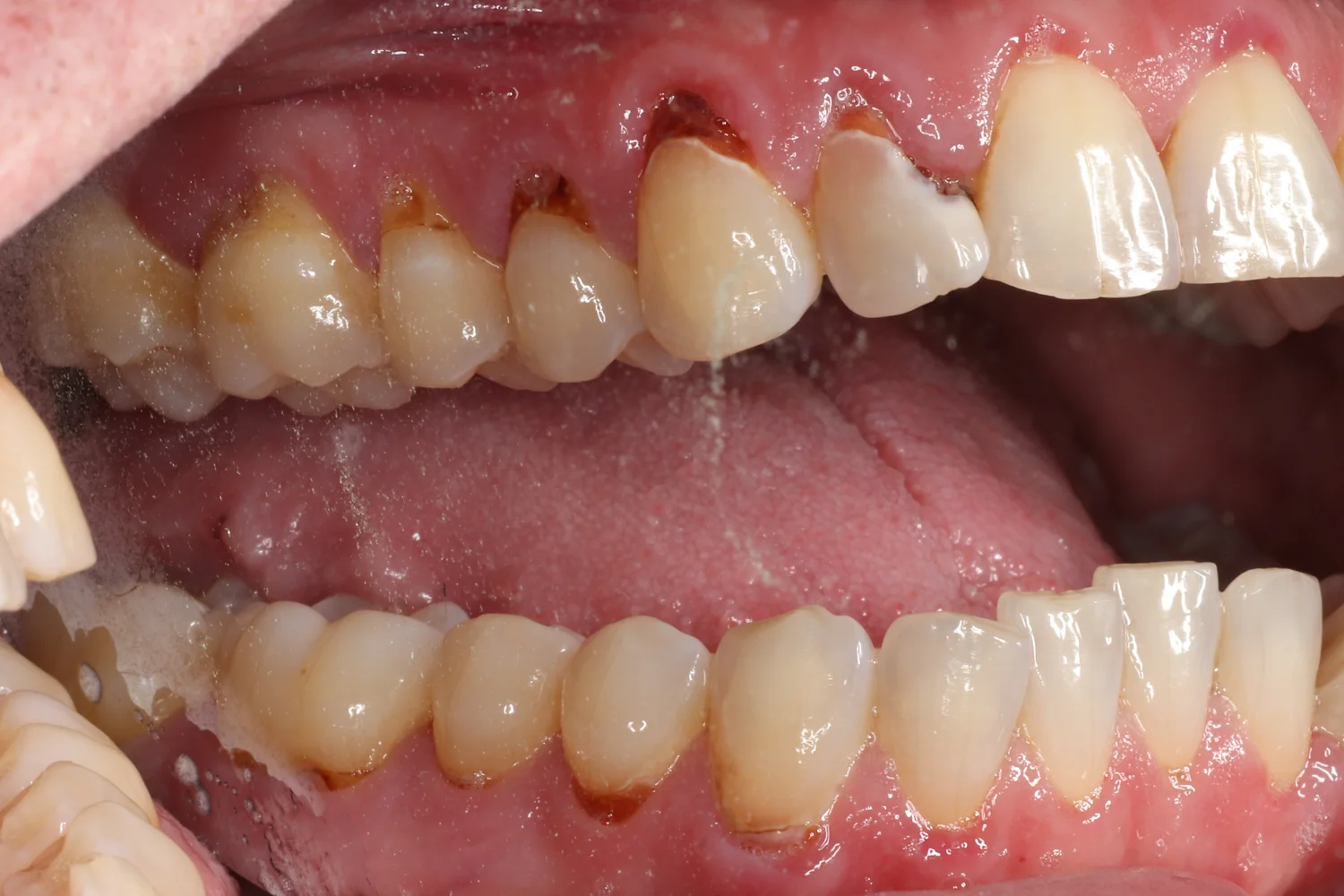
This is where the photographs are more useful than any explanation, because where the notches are points to what’s making them.
Several teeth, on both sides
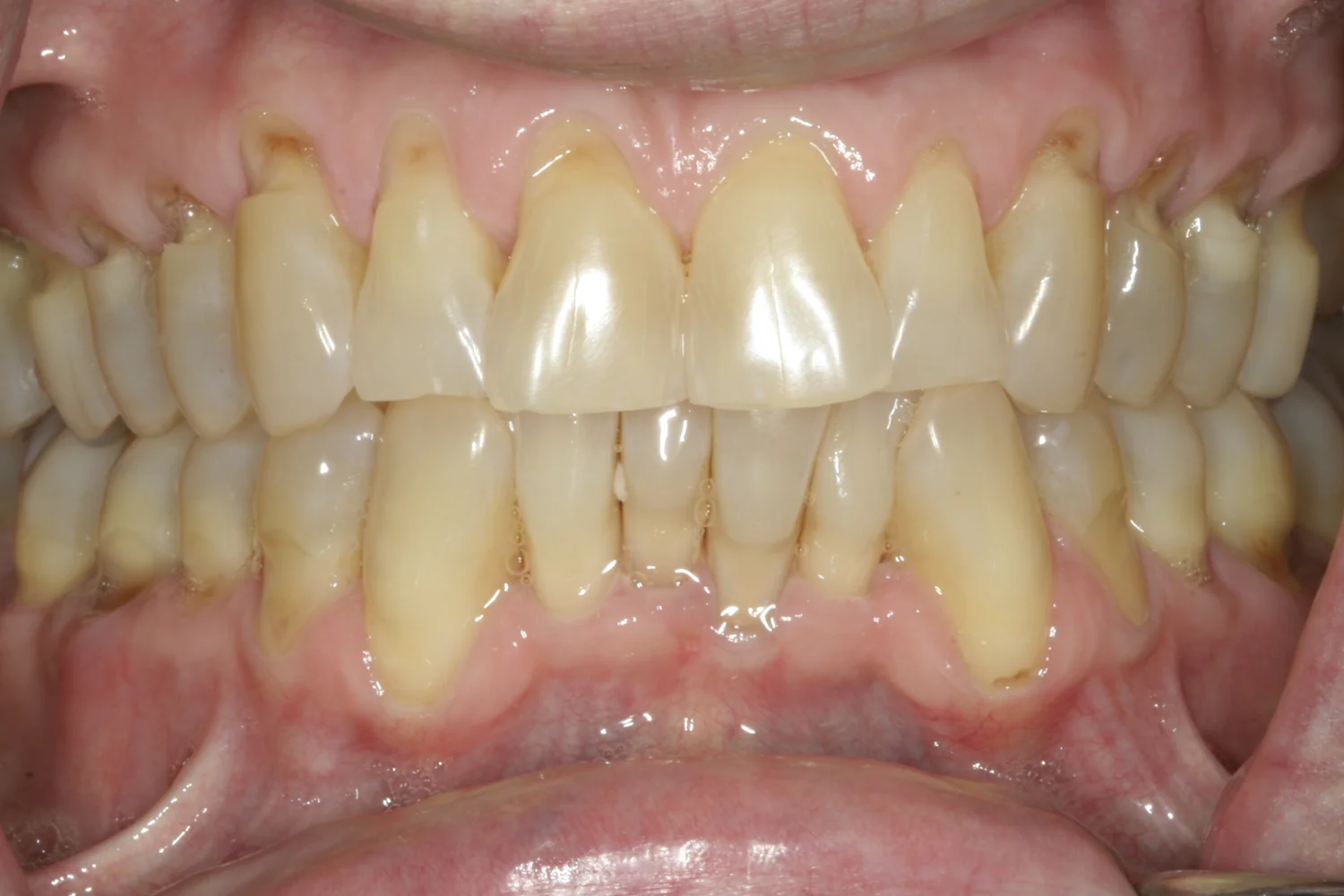
Notches across a whole row of teeth, on both sides, are the most common picture. Acid and brushing reach all of these teeth, so this pattern fits them well, and the bite may be adding to it.
One tooth on its own
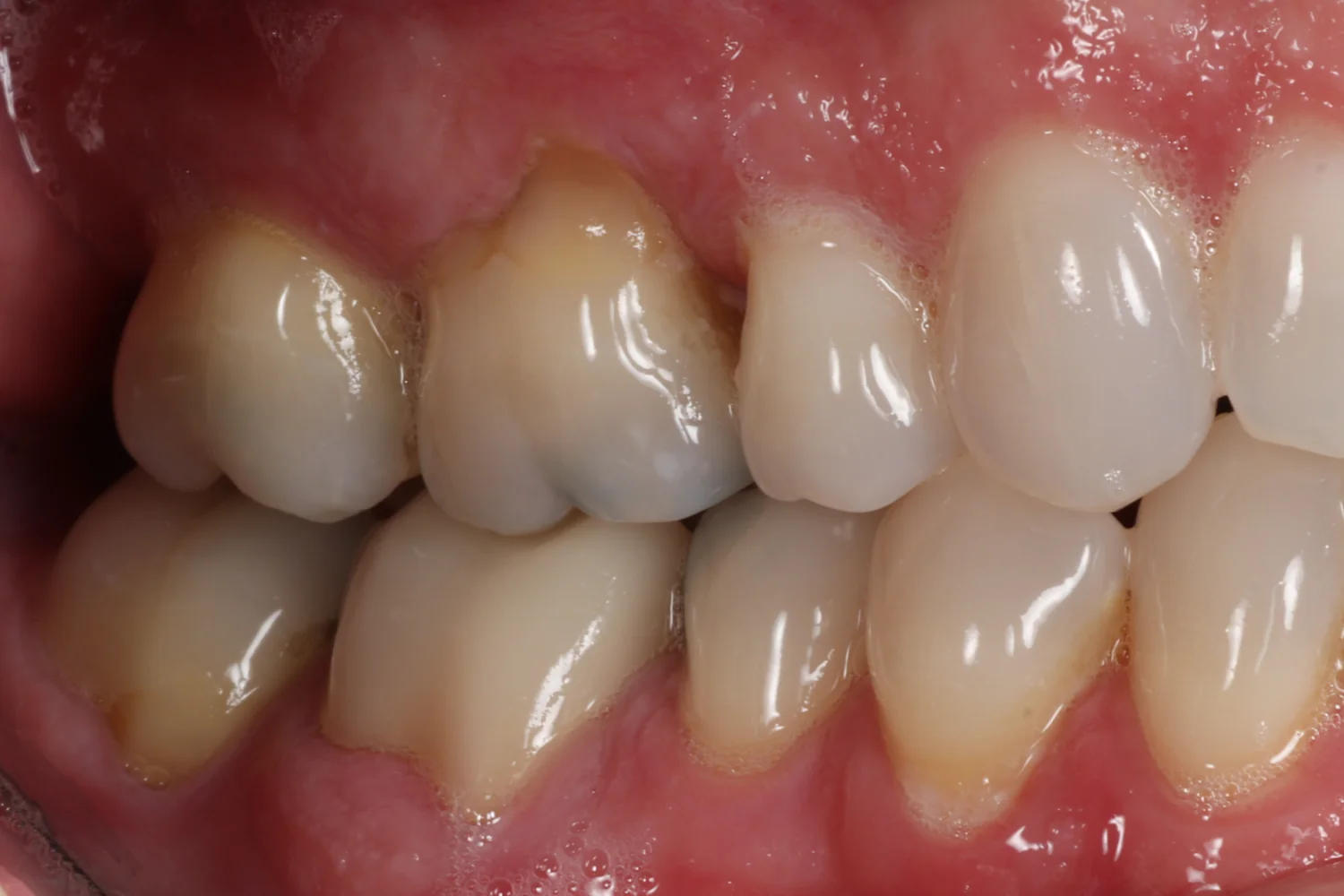
Here the notch is on one tooth, the upper first molar, and the teeth next to it don’t have one. A toothbrush reaches the neighbors just as well, so a single notch like this suggests something more than toothbrushing is at work, and we’d look closely at how that tooth meets its opposite in the bite.
The lower front teeth
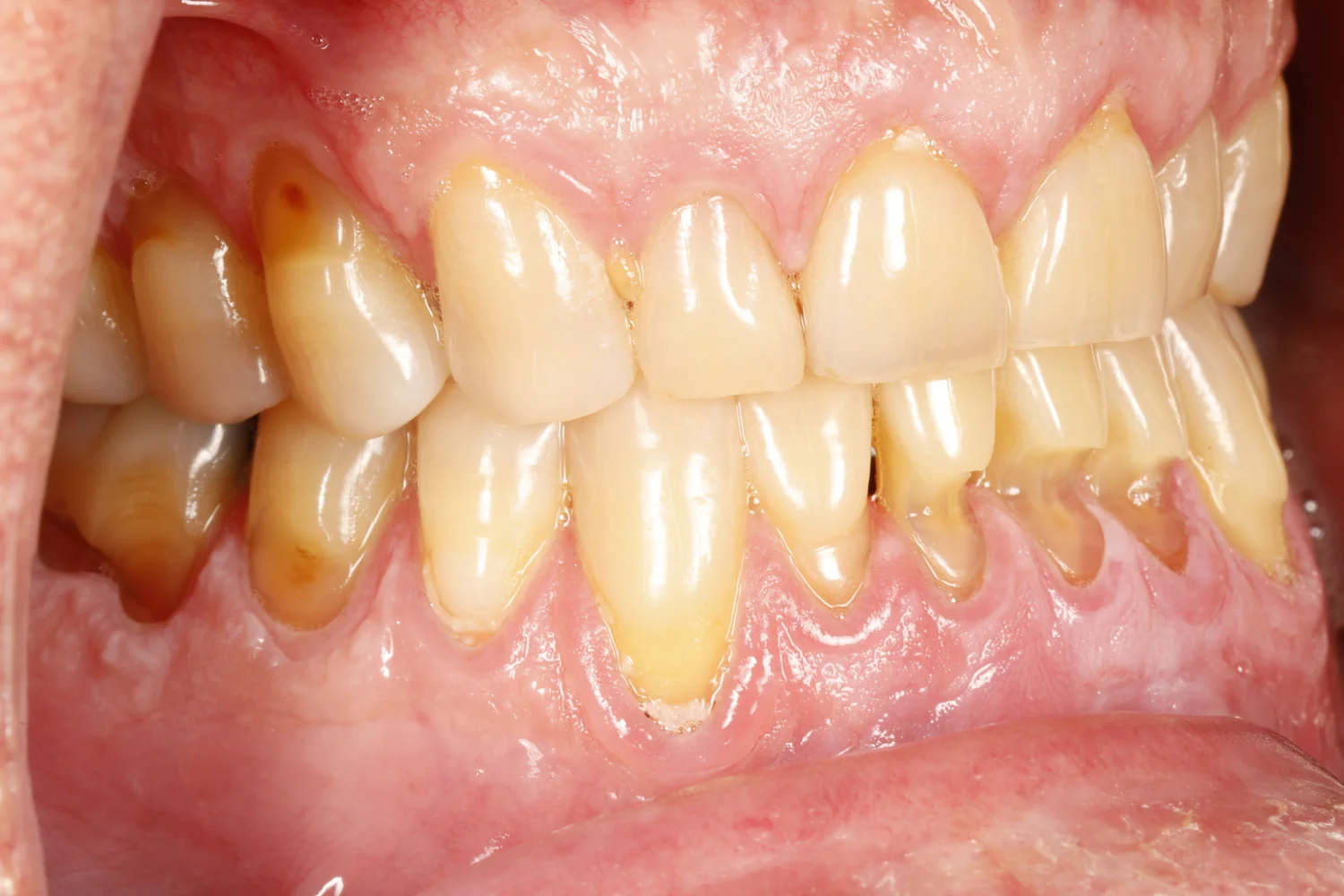
Notches like these on the lower teeth lean away from toothbrushing. They point more toward acid, pressure from the lip, or the bite.
Why not just leave it?
- It gets deeper. Whatever is wearing the notch is usually still going on, and the notch deepens if nothing changes.
- It’s often the sensitive spot. The exposed root and its open tubules are what make cold water sting.
- Exposed root can decay. With no enamel protecting it, decay can start at the gum line, where it’s easy to miss.
When a gum graft is the better answer
Bonding covers the notch with tooth-colored material. Sometimes the best option is to cover it with gum instead.
That’s work for a periodontist, a specialist in the gums and the bone around the teeth, and we refer for it. Often the surgeon will flatten out the notch first and then graft gum tissue over it, so the exposed root is covered by gum again rather than filled.
It isn’t the answer for every notch. Whether it’s the right one for a particular tooth is a decision we make together with you and the periodontist.
What we would actually do
Find the cause first. Covering a notch without changing what’s wearing it away means doing it again later.
- Look at the pattern. Which teeth, which side, how deep, and whether it matches the way you brush or the way your teeth meet.
- Look for the acid. What you drink and how you drink it, reflux you may not know you have, and a dry mouth.
- Look at the bite, especially when a notch sits on one tooth on its own. If clenching is part of the picture, the clenching side is here.
- Calm the sensitivity. If the teeth are very sensitive, we start with a fluoride varnish in the office to see if that helps. At home, a sensitivity or nano-hydroxyapatite toothpaste, not a whitening one.
- Monitor the small ones. A small notch doesn’t always need covering. We note it and watch it at your checkups.
- Cover the notch, once the cause is under control. Often that’s tooth-colored bonding, which adds material without removing any tooth. Sometimes it’s a gum graft, and we refer to a periodontist for that.
At home, in the meantime: a soft brush, a lighter hand, a toothpaste that isn’t abrasive, and less sipping of acidic drinks through the day. Like anything, every situation is different, so if that isn’t making a difference, that’s the time to have us take a look.
Worth bringing up
If your fingernail catches at the gum line, or cold water stings on a few teeth, mention it at your next visit rather than living with it. Call 702-734-0776 or tell us what’s going on.
Whether flexing of the tooth under the bite contributes to notching at the gum line is debated in the literature and is presented here as a theory, not settled fact. General education, and not a substitute for an exam.