

“I just want a nicer smile” is a fine place to start, but it isn’t a treatment plan. Stains, chips, gaps and wear all have different causes and different fixes, and the wrong fix for the wrong cause doesn’t last. So we do what we do for everything else here: figure out what’s actually causing it, then pick the treatment that fits.
We’re a cosmetic dentist in Las Vegas, on Lake Sahara Drive near Summerlin, Spring Valley and The Lakes, and this office has been here since 1968. Veneers, bonding and crowns are done here by Dr. Sandquist. For straightening, Dr. Lee-Mirzayan provides Invisalign here, and if you’d rather see an orthodontist, we’ll refer you to one. Every case below is our own patient.
Looking for veneers? Our porcelain veneers page covers how we plan and make them, how many visits it takes, and porcelain versus composite. For a chip or a small gap, bonding is often the simpler answer.
Want a nicer smile? We start by figuring out what’s causing the stains, chips, gaps or wear, then pick the fix that fits.
A card is needed to schedule online. Appointments missed, or cancelled with less than 24 hours’ notice, are charged a $75 fee.
What a smile makeover involves
People come in asking for a result. What we plan is a sequence, and the order matters. Doing these steps in the wrong order is the most common reason cosmetic work has to be redone.
- Health first. We treat decay and gum disease before any cosmetic work starts. You can’t build something beautiful on a foundation that’s breaking down, and the edge of a veneer sitting on inflamed gum will look wrong within a year.
- Then position. If the teeth are crowded or the bite is off, moving them comes next. This is the step people most want to skip, and skipping it is expensive. A crooked tooth can be disguised with porcelain, but only by removing more tooth to fake the position. Straightening first means thinner veneers and less tooth removed, and often no veneers at all.
- Then color. Whitening happens before any new dental work is made, never after. This one trips up almost everyone, so it’s worth understanding.
- Then shape. Bonding, veneers or crowns, made to match the color you’ve settled on and the position your teeth are now in.
Why whitening has to come first. Porcelain and composite don’t whiten. Whatever shade your natural teeth are on the day a veneer is made is the shade that veneer gets matched to, for good. Whiten afterward and your natural teeth get lighter while the new work stays the same, which is how people end up with a front tooth that doesn’t match the one next to it. Whiten first, give the shade a couple of weeks to settle, then match to it.
The options, and when each one makes sense
Most people need one or two of these, not all of them. When it takes more, here’s what a smile transformation actually takes.
- Teeth whitening: for surface stains from coffee, wine, tea and age, when the teeth underneath are healthy. If your problem really is surface stain, we’ll tell you to try drugstore whitening strips first. They work, the chemistry is the same as ours, and most offices won’t tell you that. Professional whitening makes sense when strips have already failed or when the discoloration isn’t on the surface at all.
- Cosmetic bonding: for small chips, small gaps and edges that need rebuilding. Bonding is added to the tooth instead of cutting into it, which makes it the conservative option and often the right one. It stains and chips sooner than porcelain, but it can be repaired.
- Porcelain veneers: for deep staining inside the tooth, big changes in shape, and teeth that bonding can’t handle. They look great and they last, but they can’t be undone, because preparing a tooth for one removes enamel that doesn’t come back. How long veneers last, and what makes them fail.
- Invisalign: when the real issue is where the teeth are, not their color or shape. It’s often the cheapest and least invasive answer to something that sounded cosmetic.
- Crowns, which most people call caps: when a tooth needs strength as well as a better look, usually because it’s cracked, heavily filled or has had a root canal.
Why we start with a real exam
Everyone gets a 3D scan, photos and a full look at their bite before we talk about any cosmetic option. That’s how we catch the cases where whitening won’t work because the discoloration is inside the tooth, or where a chip keeps coming back because of a bite problem underneath.
Chipped front teeth are the clearest example. We can rebuild a chipped edge in twenty minutes. But if it chipped because of the way your front teeth meet when your jaw slides sideways, it’ll chip again, and the next repair will be bigger. Finding out why isn’t a delay in the cosmetic work. It’s what decides whether the cosmetic work lasts.
What affects the cost
We don’t publish prices, because “a nicer smile” can mean anything from one appointment to a year of treatment done in steps. Here’s what sets the number:
- How many teeth show when you smile. Usually six to ten, and that’s what sets the scope of a makeover, not all thirty-two teeth.
- Whether anything needs fixing first. Gum treatment, decay, a failing old filling or crown, or a bite problem all come before the cosmetic work.
- Which option your case actually needs. Bonding, whitening, aligners and veneers cost very different amounts, and the most expensive isn’t automatically the best.
- Whether the work has to hold up to grinding. That changes the materials, and whether a night guard is part of the plan.
Dental insurance generally doesn’t cover cosmetic treatment. The parts that are covered are covered because they also repair damage. If part of your plan qualifies, we’ll tell you which parts and why. See our article on dental insurance.
When the cosmetic answer is the wrong question
Some of our most satisfying cases are the ones where what looked like a cosmetic problem turned out to be something else, and fixing that gave a better result than veneers would have.
Gaps that opened because of a tongue habit will open again after they’re closed unless the habit is treated. Teeth that look short and square are often worn down, not naturally small, and rebuilding them without understanding the wear means watching it happen again. A gummy smile is sometimes about the gum line and sometimes about how the lip moves.
When the wear or the bite problem runs across the whole mouth, the plan becomes a full mouth reconstruction rather than a makeover.
None of that means you can’t have what you came in for. It means the plan is built on what’s really going on, and that’s the only reason it holds up.
Real cases from our practice
Every one of these is our patient, photographed here, with the work done in our office.
Veneers, thirteen years on: A.S.
A.S.’s teeth had yellowed, worn down and drifted out of line. We talked about straightening them first. She decided against orthodontics, so we planned ceramic veneers on her upper and lower front teeth. The before photo is from 2013. The after was taken in 2026.
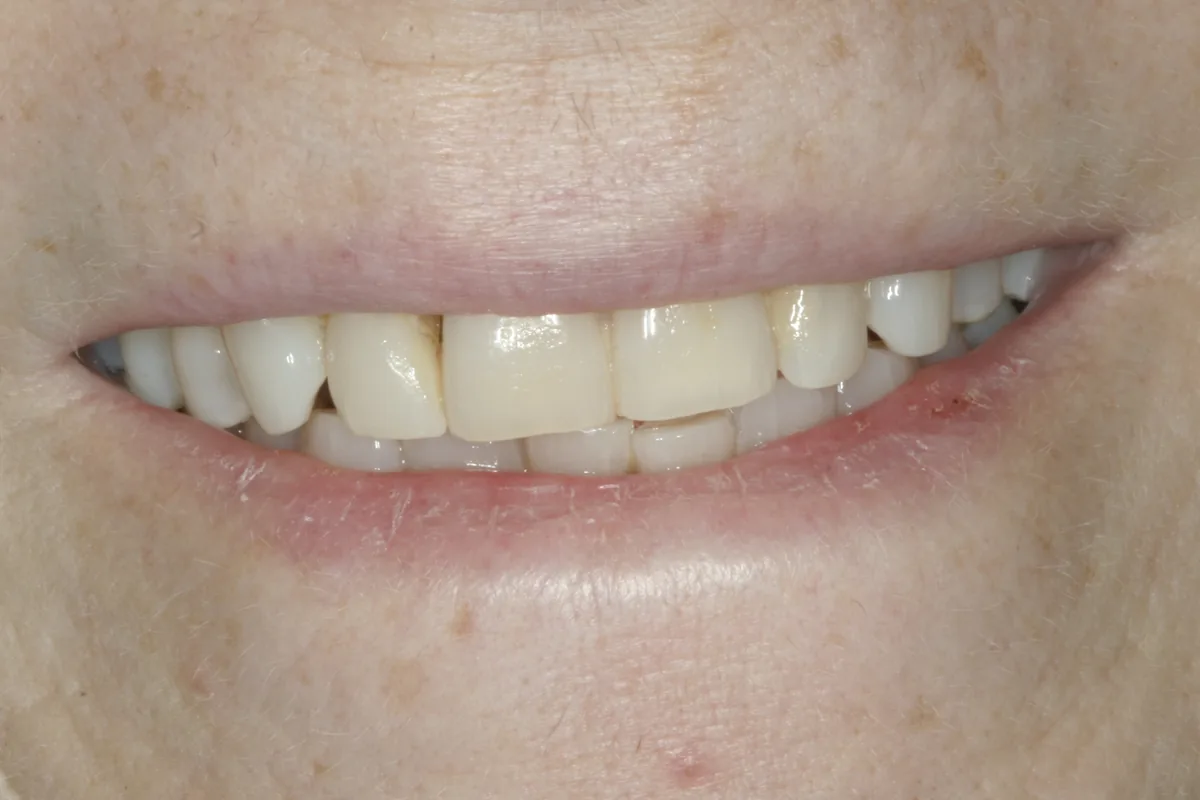
Before, 2013.
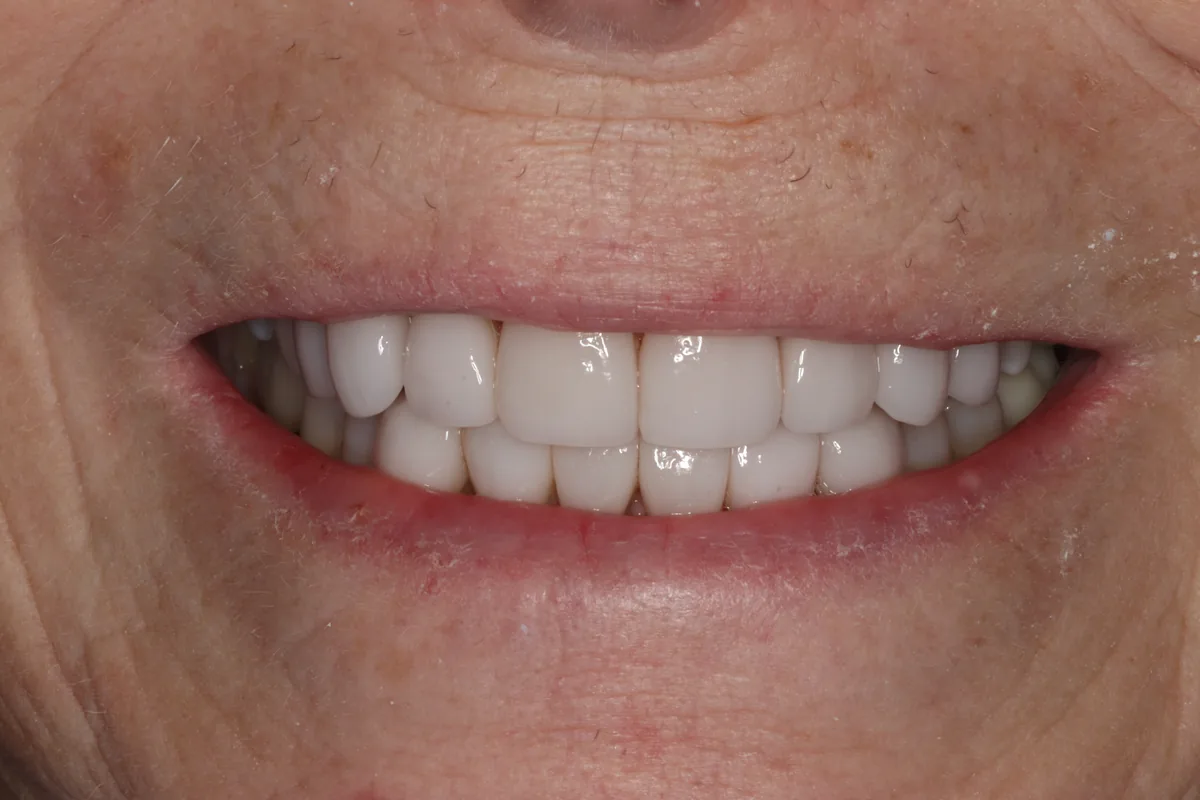
After, 2026: the same veneers thirteen years later.
She asked about whitening: D.T.
D.T. came in asking about whitening, but wasn’t convinced it would be enough on its own. A closer look found real wear underneath the discoloration. Ceramic veneers restored both the length and the look she wanted.
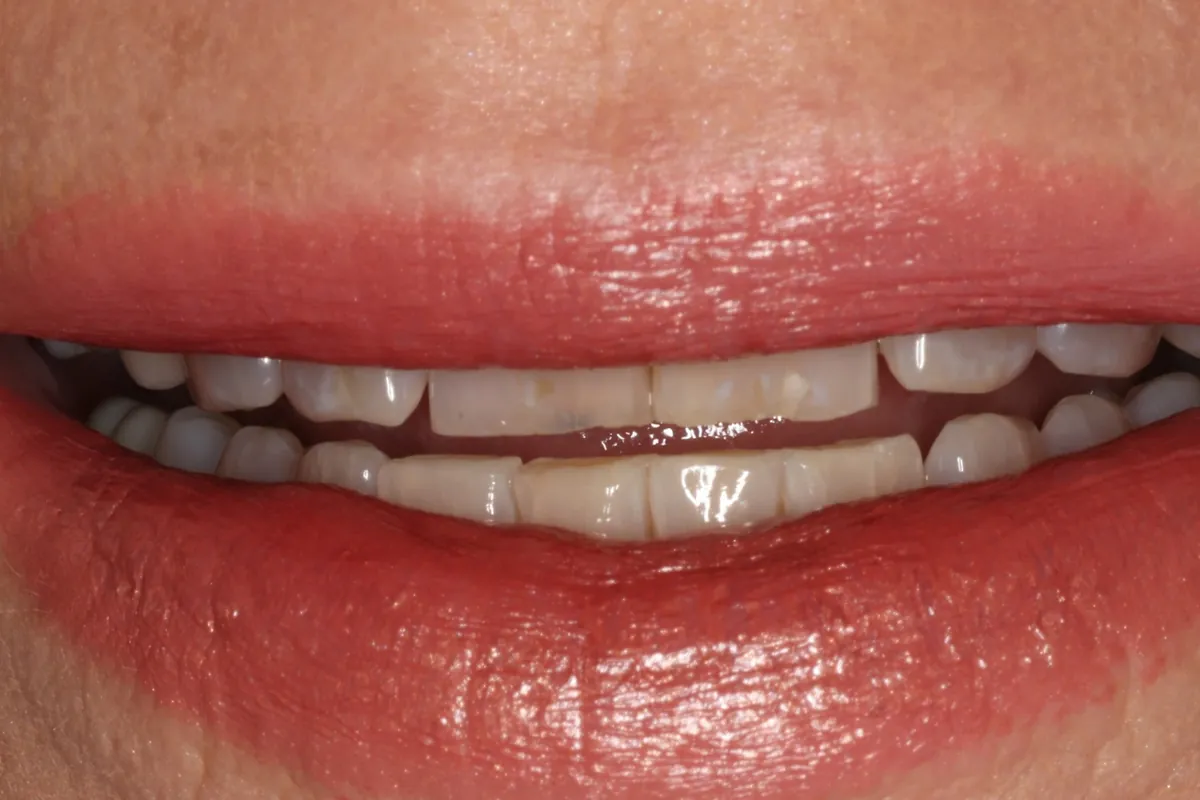
Before. Discolored, and worn shorter than they looked at first.
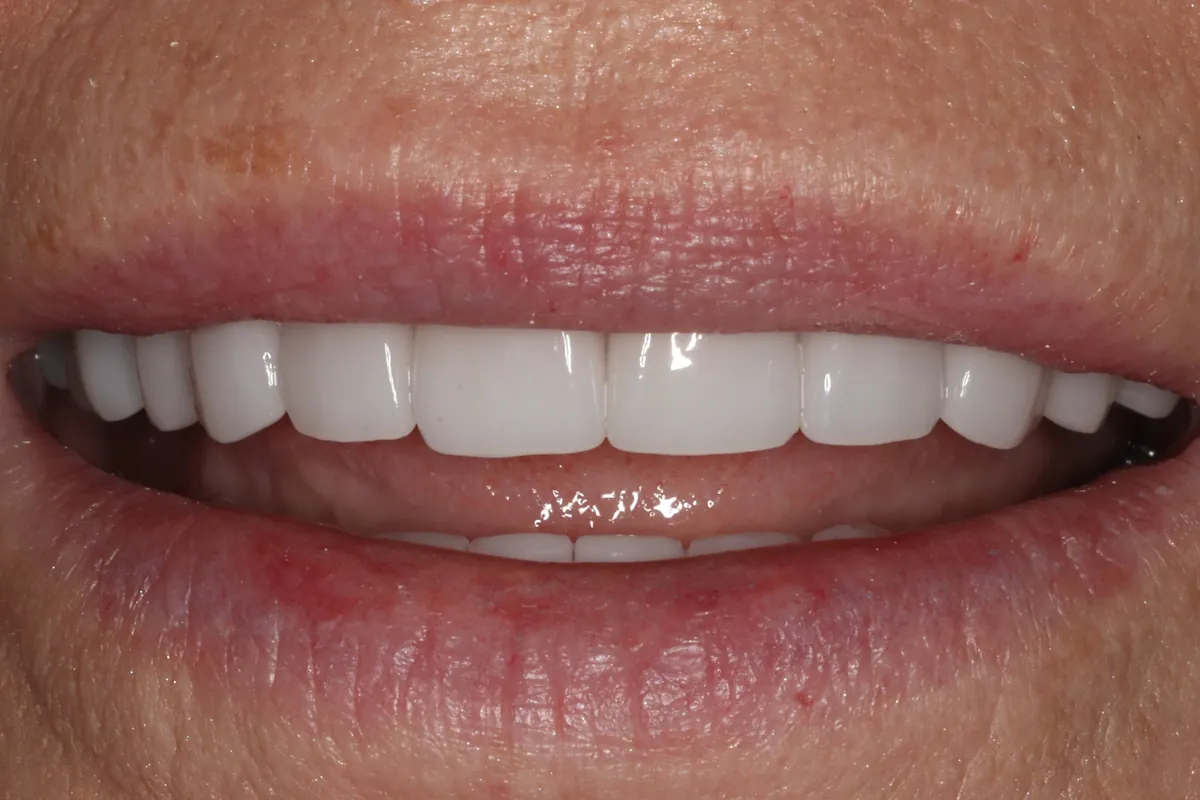
After. Length and color restored with ceramic veneers.
A chip and a gap: S.C.
A chipped tooth got S.C. in the door. Once we asked, he admitted he’d never liked the gap between his front teeth either. We prepared the teeth and placed temporaries, then delivered e.max crowns that fixed the chip and closed the gap.
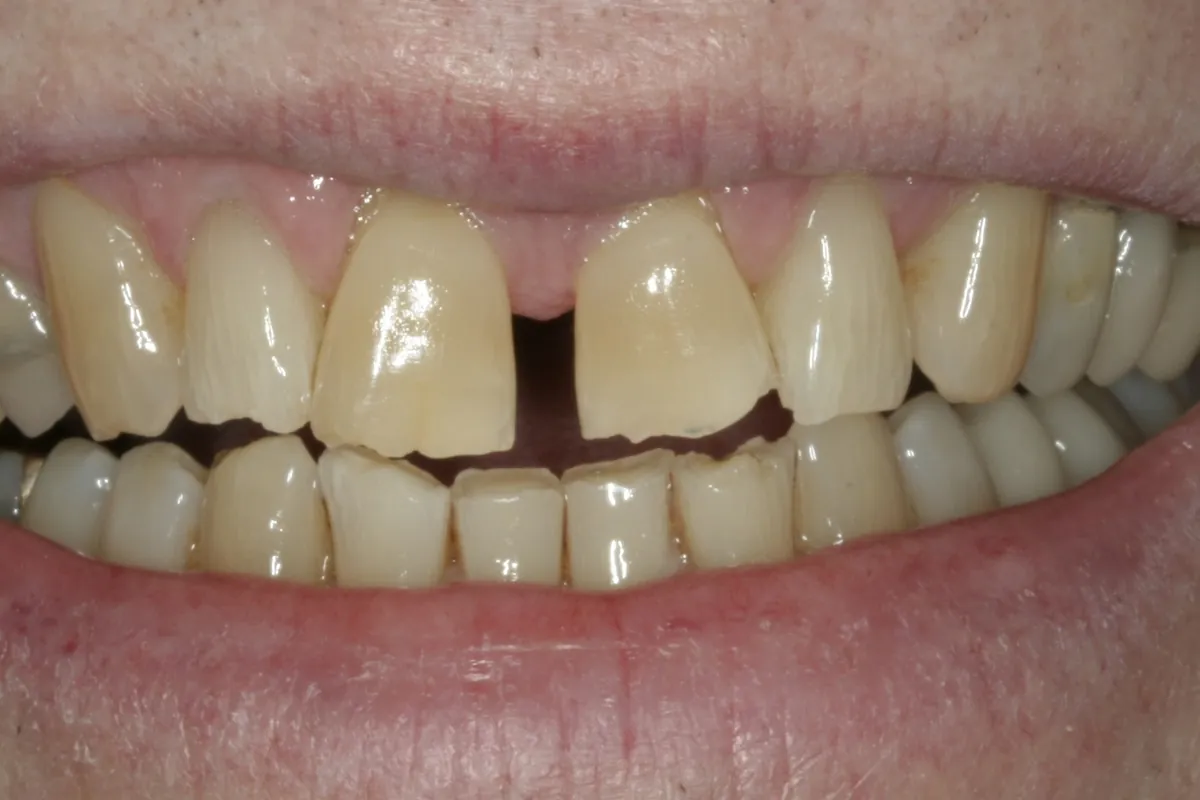
Before.
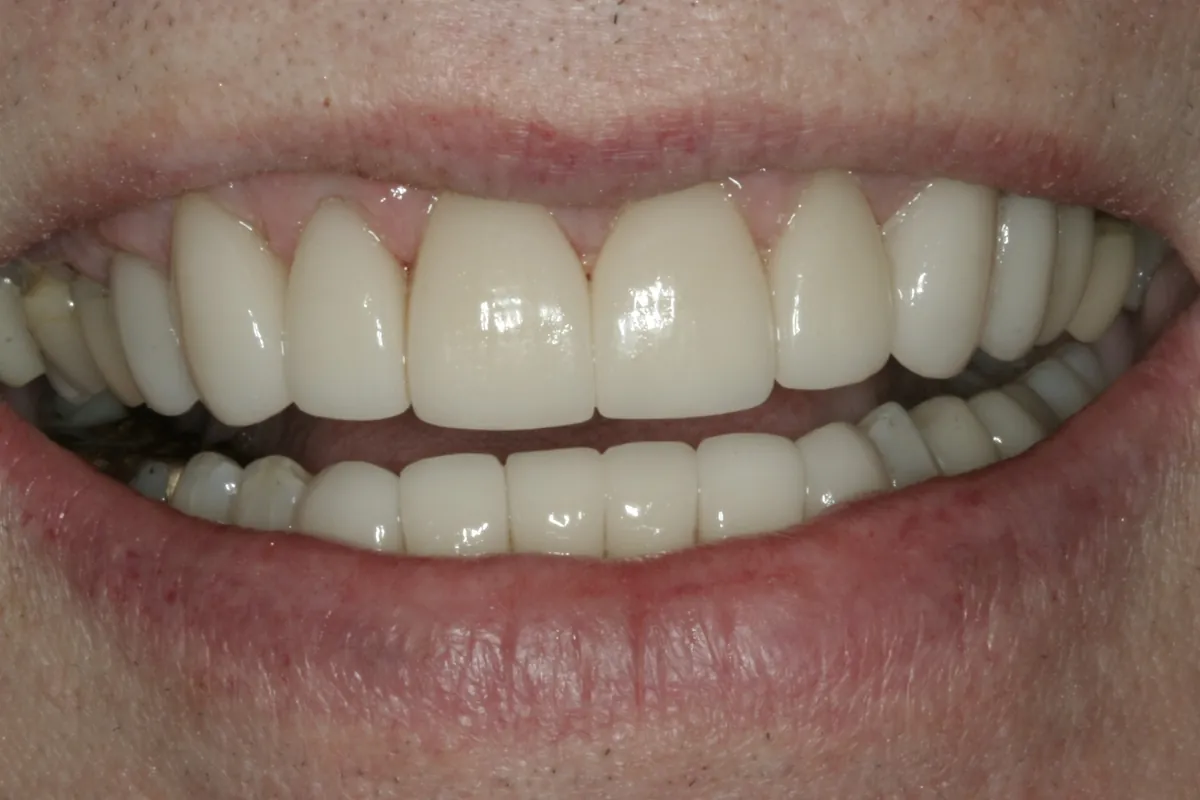
After. Chip and gap fixed with e.max crowns.
Straight, without aligners: P.C.
P.C. had spent years trying to fix her crooked lower teeth. She’d tried clear aligners before and wasn’t going to commit to them again, so when a tooth chipped, she wanted a real fix instead. A complete review found a restorative path to exactly what she wanted: a straight smile, with no aligners and no braces.
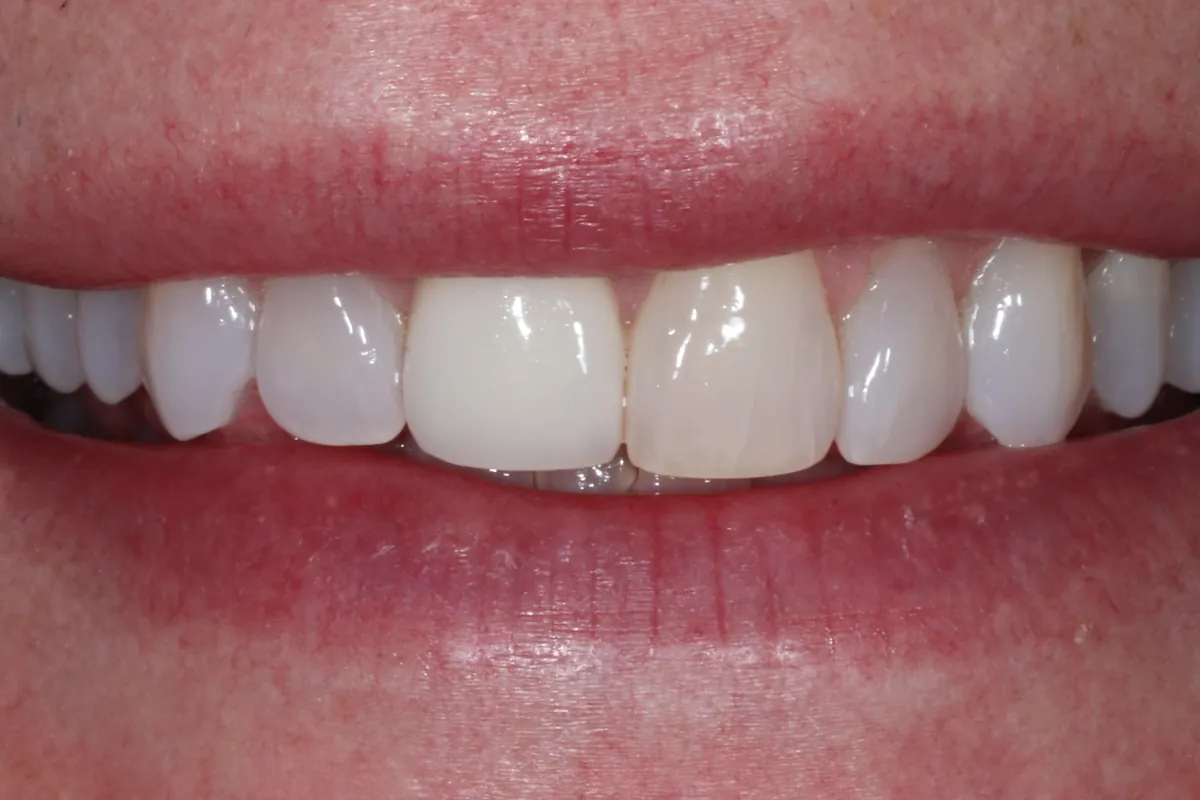
Before. Crooked lower teeth and a chipped tooth.
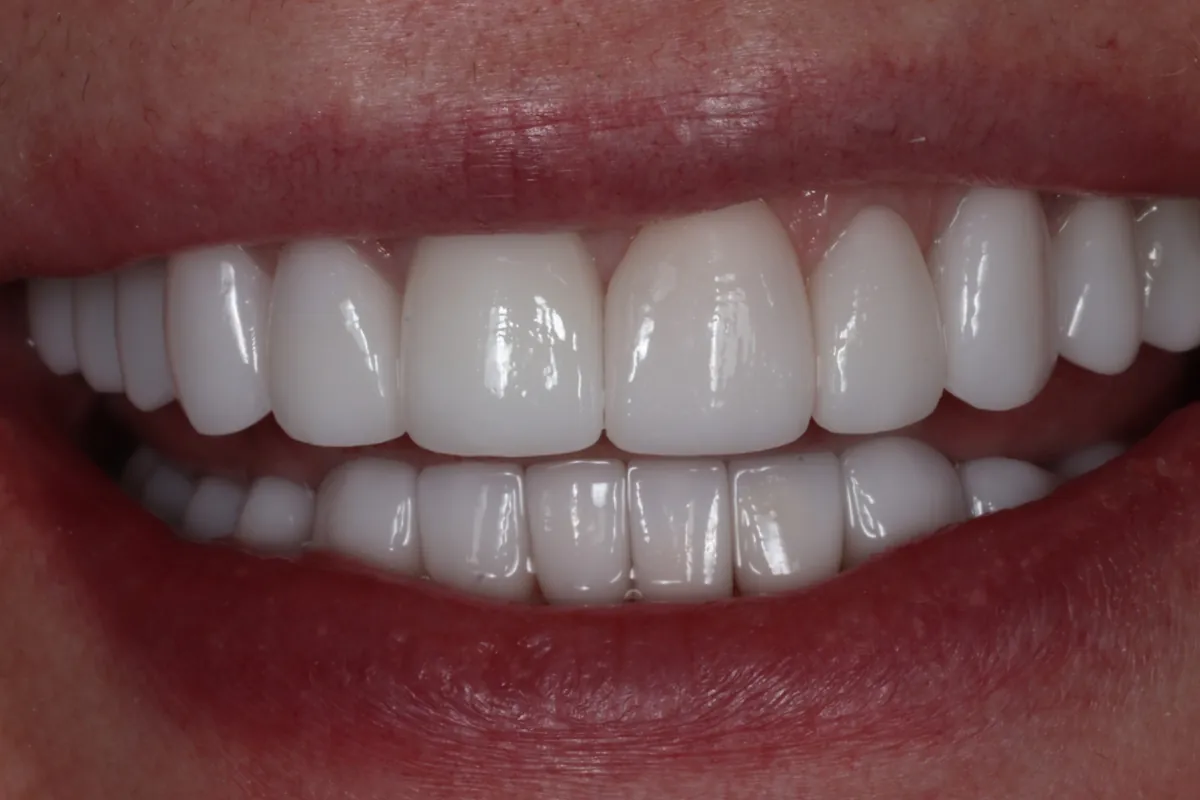
After. Straight and even, without aligners or braces.
Worn down by erosion: P.B.
P.B.’s teeth were worn and sensitive, had started to look bad, and were getting in the way of eating comfortably. A full exam showed years of enamel erosion had worn them down. Zirconia crowns restored what had been lost, bringing back both function and a smile he’s confident in.
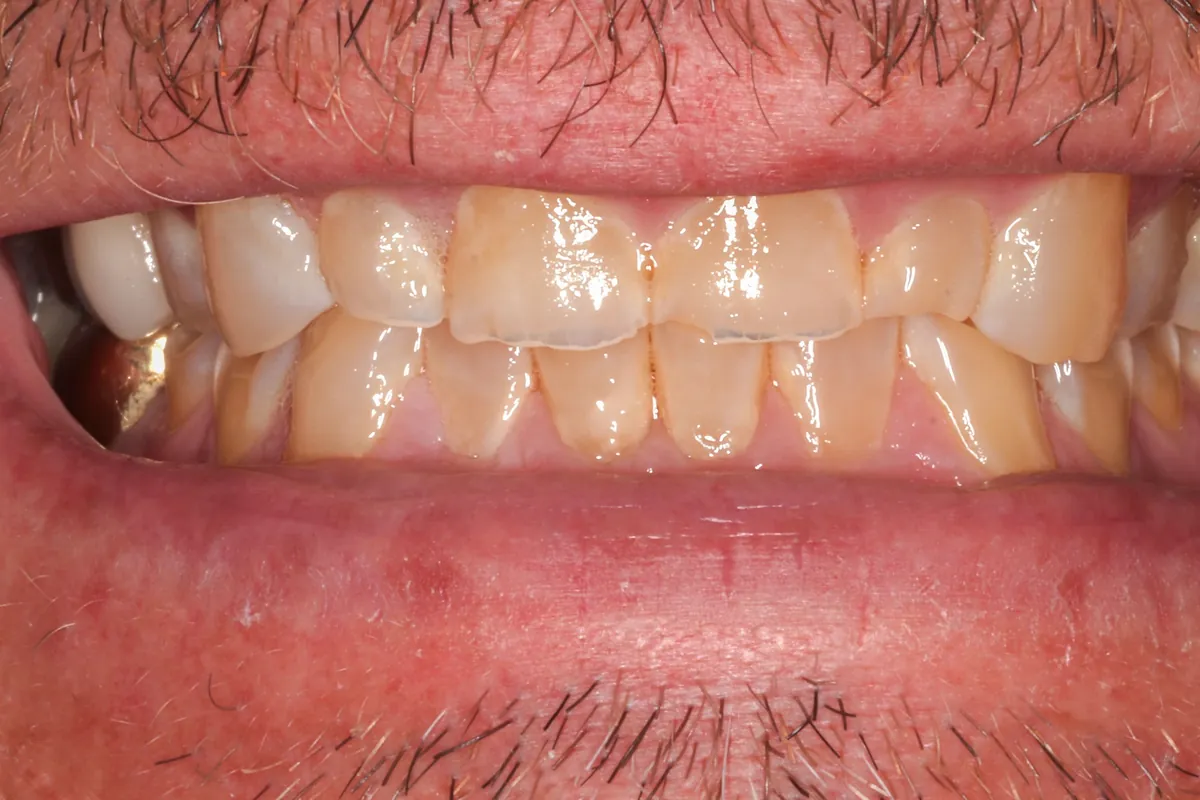
Before. Worn down by years of erosion.
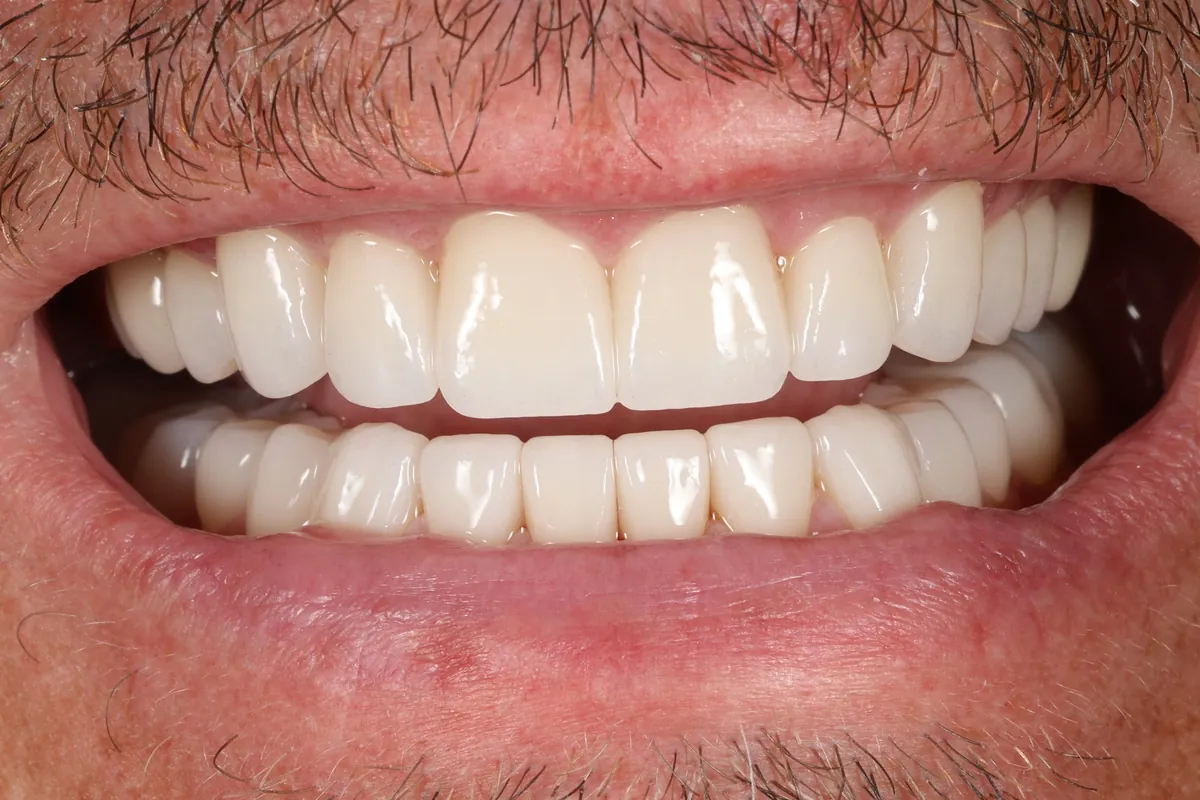
After. Restored with zirconia crowns.
More cases:
Old darkened bonding and crooked teeth, solved without braces →
Dark triangular gaps left by braces, closed with bonding alone →
A dark space from dental work abroad, closed with just a few teeth →
Crowding straightened before it became a hygiene problem →
Gaps from a tongue thrust, closed after the habit was treated →
Uneven wear corrected with alignment first, then restored →
See every case in our Smile Gallery → For bonding alone, see our bonding cases.
In our patients’ words
“Not only is he an excellent preventive maintenance dentist, but he does beautiful cosmetic work! I often get compliments on my teeth (who does that?!) and I always say, “Thank you, I have the best dentist!”.” Linn Billingsley
“Dr. Doug is an amazing dentist. He has an innate artistry in his dentistry.” Mary Muratore
“Once again, Dr. Doug come to the rescue he put my veneer in to replace the temporary seamlessly without pain and it looks tremendous definitely the best dentist in the country who cares even though he’s a cub fan” Jimmy Cash
More patient reviews, by topic →
Where to start
Bring in whatever bothers you. A consultation here starts with the scan, the photos, and a conversation about what you want to change. You’ll leave knowing what’s causing it, which of the options above fits, what order things would happen in, and what it costs. Call 702-734-0776.