

A lot of people go to Mexico, Costa Rica, Turkey, the Philippines or Europe for dental work, usually to save money. Sometimes it works out. When it doesn’t, the hardest part is often finding someone at home who will look at it and tell you straight what’s going on.
We will. Where you had it done isn’t the point, and you won’t get a lecture about it. What matters is what’s in your mouth now and what it needs.
The short answer: we don’t patch work done abroad. If it isn’t right, it generally needs to be replaced, and we start over with a full plan. Occasionally the problem is one only a surgeon can fix. A comprehensive exam tells you where you stand before you spend anything more on it.
Going abroad isn’t the problem by itself
Good work gets done overseas, and shady work gets done here at home too. The country isn’t really the issue. The issue is that if you choose to go abroad, you may need to head back there to have a complication dealt with.
We recently saw a patient with bite problems after work done in Eastern Europe. The bite was far enough off that the only way Dr. Sandquist would help was to start over, so he recommended the patient first go back for a post-op visit with the dentist who did the work.
What people come in with
Most of what we see falls into three problems, and they often come together:
- Crowns and bridges that don’t fit well. A crown that doesn’t seal at the gum line traps plaque where you can’t clean it, and that can quietly lead to decay and gum disease underneath.
- A bite that’s off, with soreness, chipping or breakage that traces back to it.
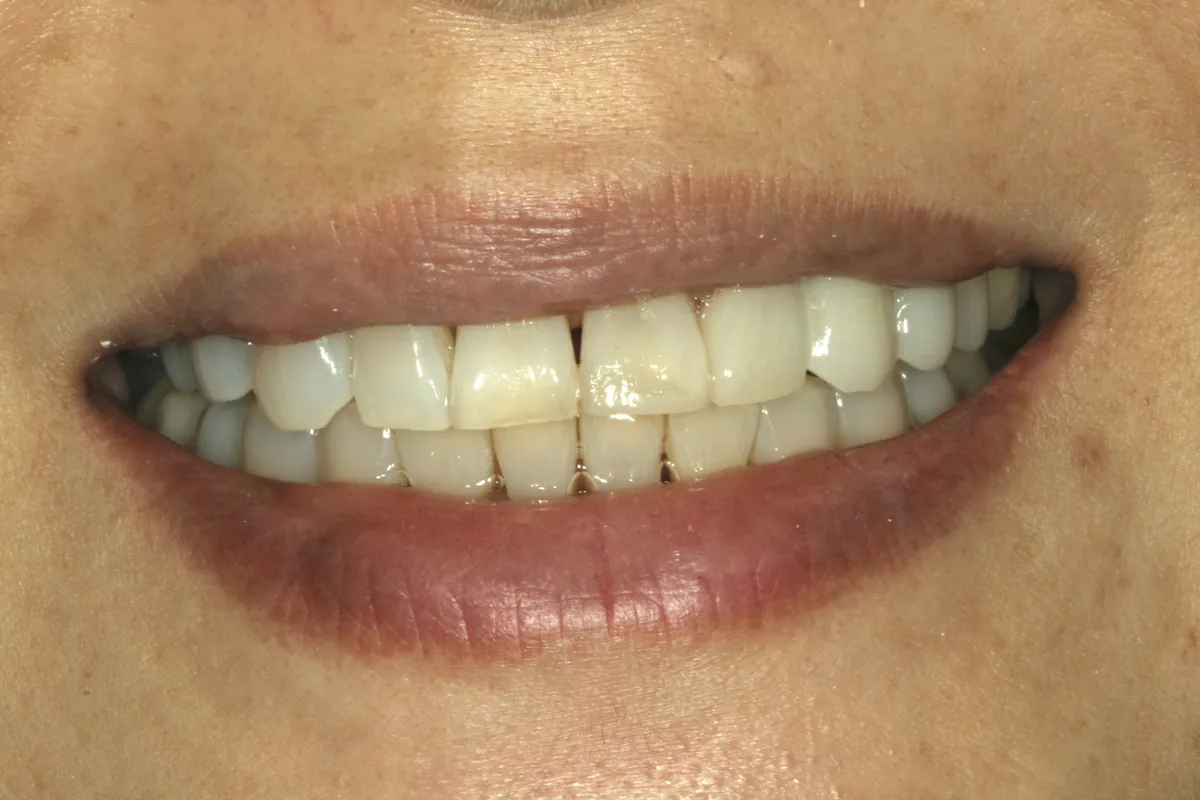
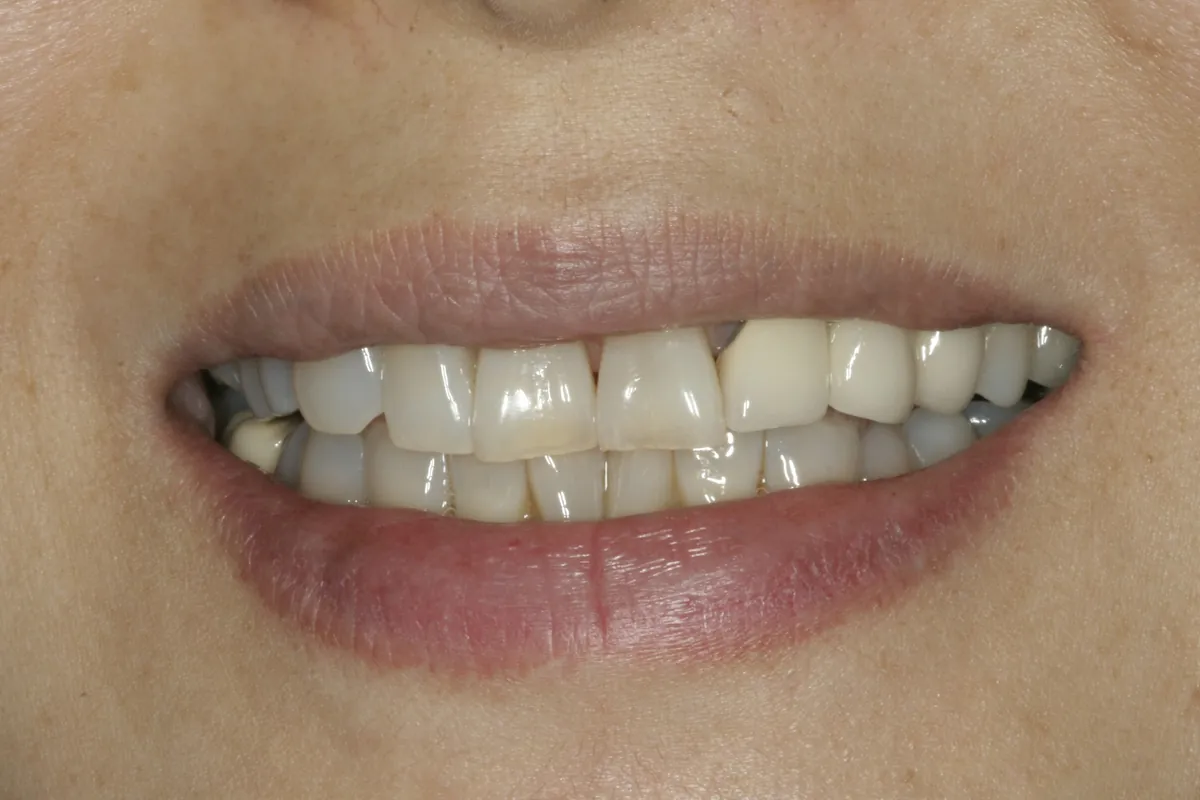
- Teeth glued together. Crowns joined into one piece across several teeth, so there’s no way to clean between them.
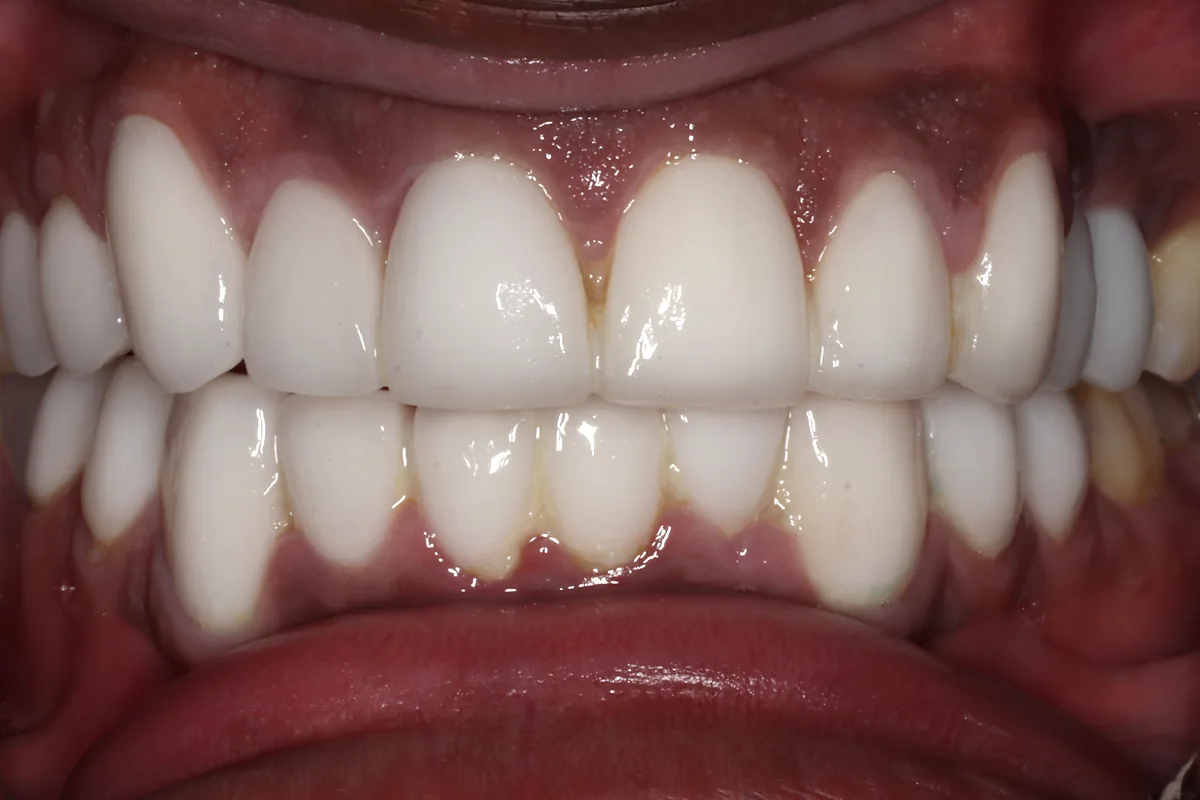
Teeth glued together: crowns done in Europe, joined across the front teeth.
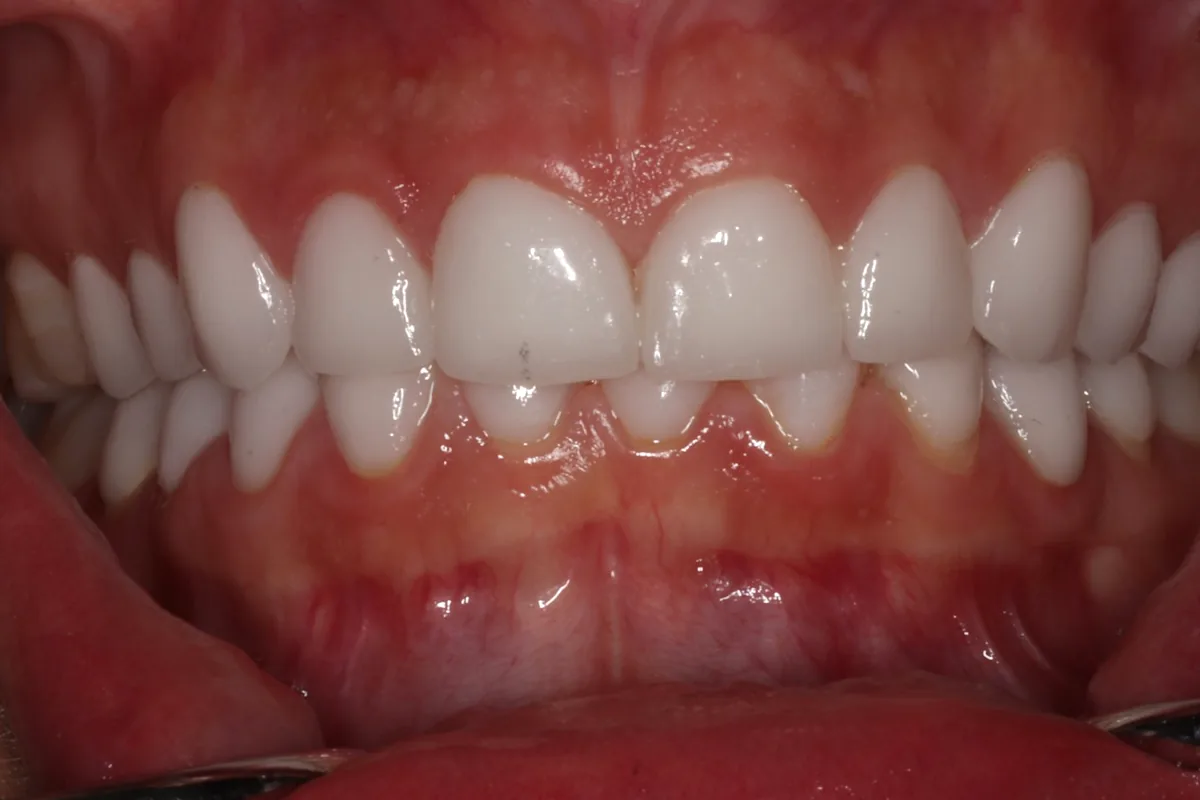
The same problem from Turkey: crowns joined together across the upper and lower teeth.
We also see teeth that look wrong (too white, too big or too long), full-arch bridges that broke, wore down or can’t be cleaned, and the problem underneath all of it: nobody taking responsibility, because the clinic is a flight away and nobody here wants to touch it.
Two of our patients
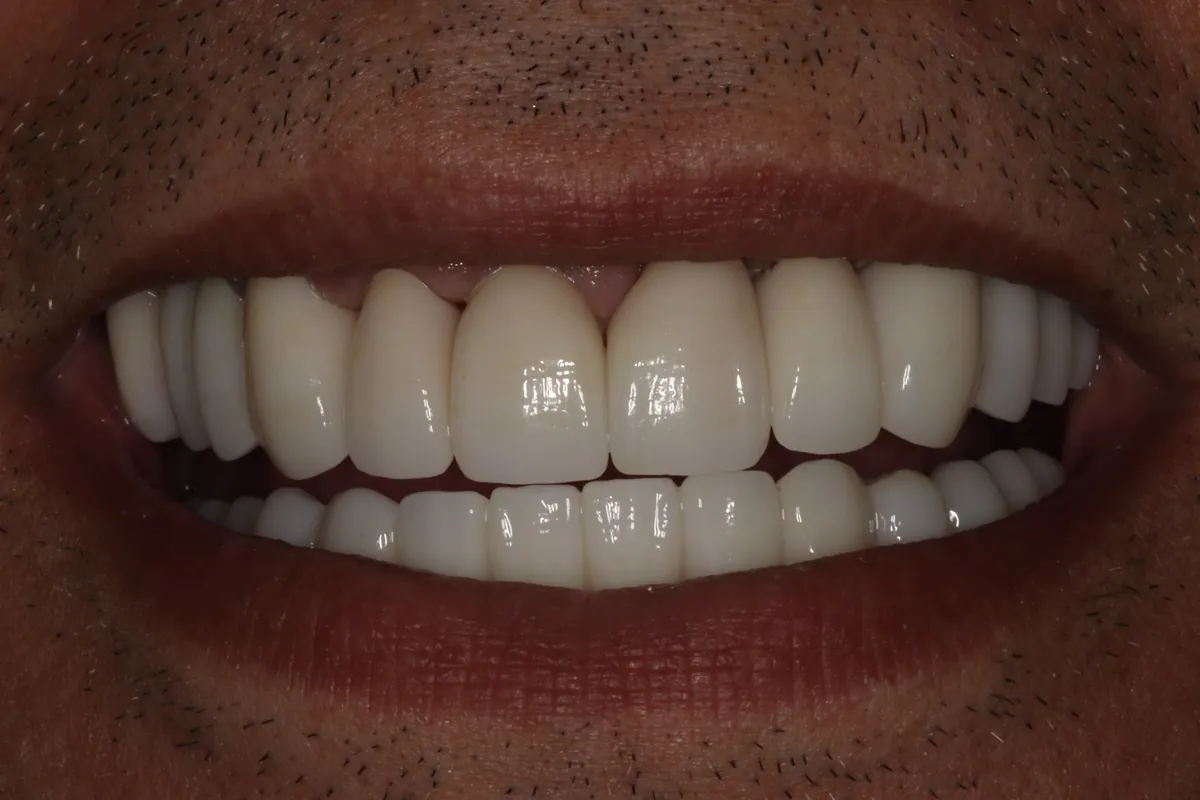
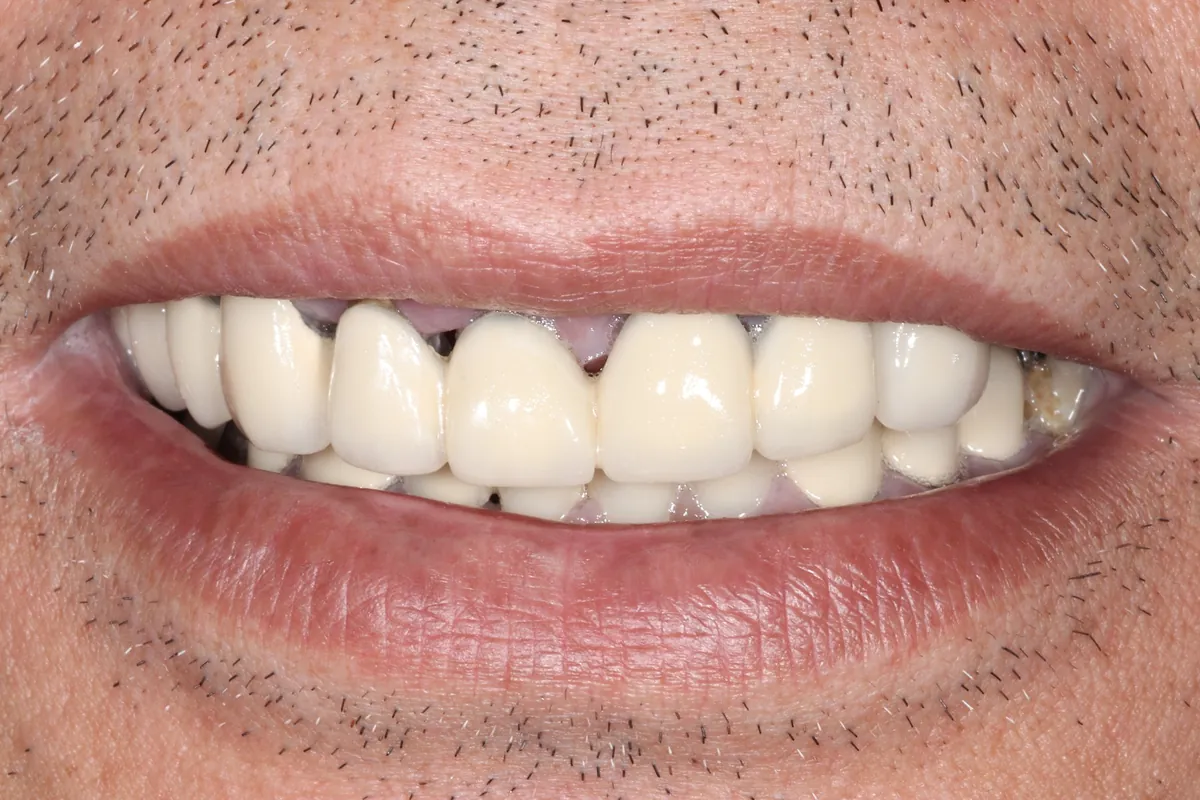
Crowns from the Philippines that never fit
The ask: He’d had crowns and bridges done in the Philippines and wasn’t happy with how they looked.
What we found: A comprehensive exam found the real problem ran deeper than looks: none of the crowns actually fit properly, which had already caused gum disease and cost him several back teeth.
The plan: We referred him to a periodontist, who treated the gum disease, removed the teeth that couldn’t be saved and placed his dental implants. The implants gave him back a bite that actually works and a smile he’s proud of.
An eye tooth replaced abroad
The ask: She’d had a missing eye tooth replaced in a foreign country and wasn’t happy with the dark space that had developed in her smile.
The plan: The old bridge was replaced. We moved the teeth slightly to improve the space, then composite bonding and a new bridge closed it out. Starting over doesn’t always mean a mouth full of crowns; sometimes it’s just a few teeth.
When the problem is where the implant went
We sent one patient out to have a tooth removed. They had it done in Mexico instead, and an implant was placed at the same visit. The X-ray showed an implant far too small for that spot, and set too deep.
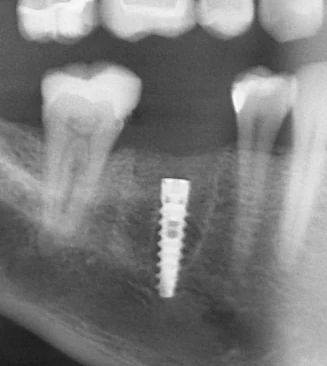
The implant as placed: too small for this spot, and set too deep.
Dr. Sandquist declined to put a crown on it. The patient went back to Mexico for the crown, and came back to us with an infection.
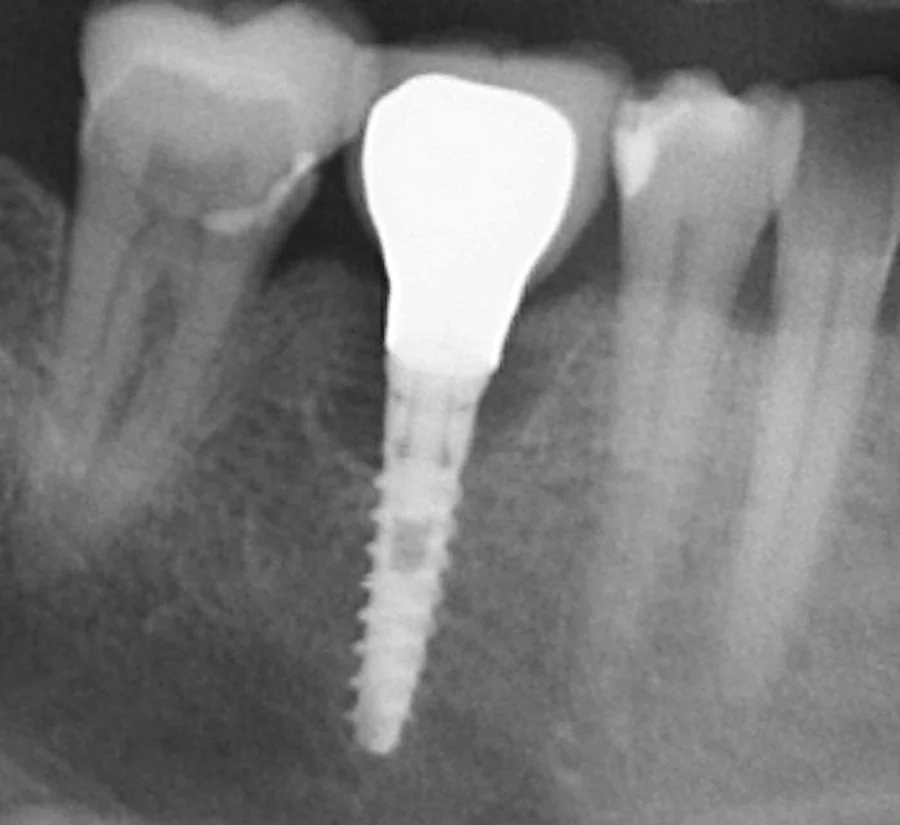
The same implant after the crown went on abroad. The patient came back with an infection.
In the end, the implant and the crown both had to come out. A new implant was placed, sized and positioned for that spot, and we made the new crown.
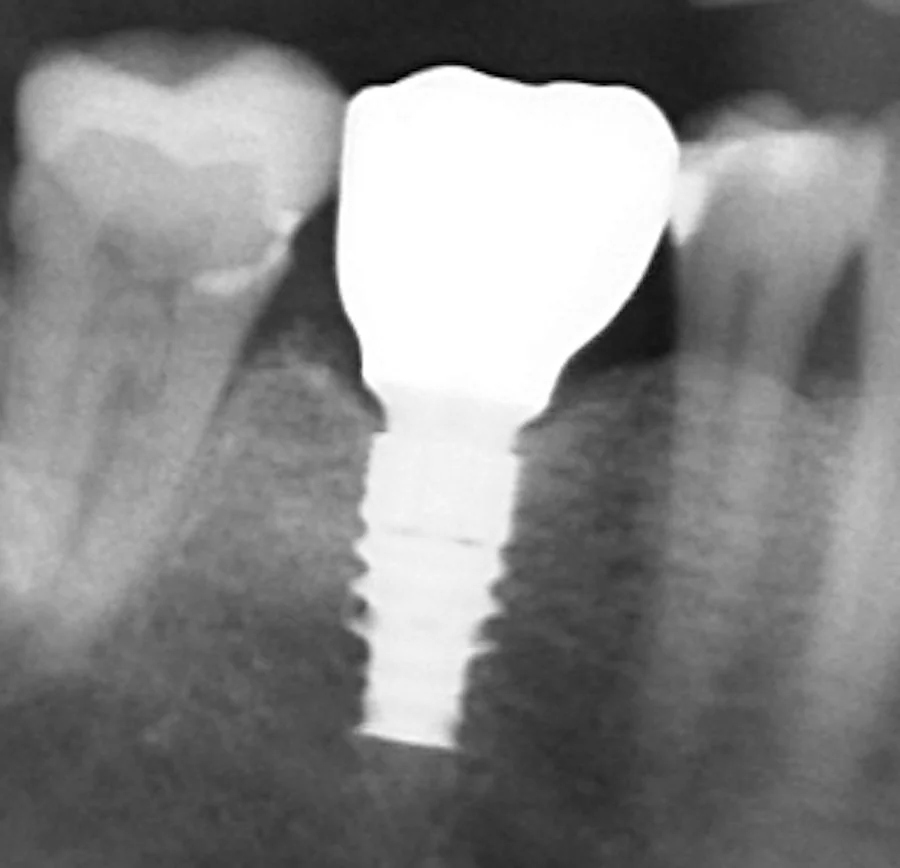
The replacement: a new implant sized for the spot, with our crown on it.
Where an implant sits decides what can be built on it. When it’s in the wrong place, a crown doesn’t fix that. It’s a surgical problem, it needs a surgeon, and we’d rather tell you that before a crown goes on than after. How implant planning works here.
Why we start over instead of patching
In general, we don’t fix work done abroad unless we start over. We don’t adjust a bite someone else built or do small repairs on crowns that never fit. If it isn’t right, it needs to be replaced.
- Crowns and bridges that don’t fit are replaced. If gum disease or decay has started underneath, that gets treated first.
- A bite that’s off is rebuilt as part of the new plan, not adjusted around the old work.
- Full-arch bridges that broke, wore down or can’t be cleaned are replaced, often with a new bridge on the implants you already have. How we handle full arches done elsewhere.
- An implant that was placed well can have a tooth put on it here, as long as we can find the right parts for it.
- Implants placed where a tooth can’t work around them can’t be fixed with a new crown or bridge. That goes to a surgeon, and we’ll tell you up front.
Starting over is a bigger conversation than a quick fix, and you’ll see the whole plan and what it costs before anything starts. Large cases can be done in stages. How a full rebuild is planned.
Bring everything you have
It starts with a comprehensive exam: an exam, photos, X-rays and a 3D scan, and a conversation about what we found. What your first visit involves.
Bring any and all records you have from the clinic: X-rays, 3D scans, the treatment plan, and any paperwork on what was done. If you have implants, anything that shows the brand and size helps us find the right parts. The more we can see, the more useful the exam is.
Where to start
If work you had done abroad isn’t holding up, or you’re just not sure about it, call 702-734-0776 or tell us what’s going on.
General education, and not a substitute for an exam.