

The short answer
Because a crack doesn’t heal, and it can keep growing. Every time you bite, the tooth flexes and the crack can creep a little deeper. A small crack that doesn’t hurt at all can still end with losing the tooth. Found early, the tooth can usually be held together with a crown.
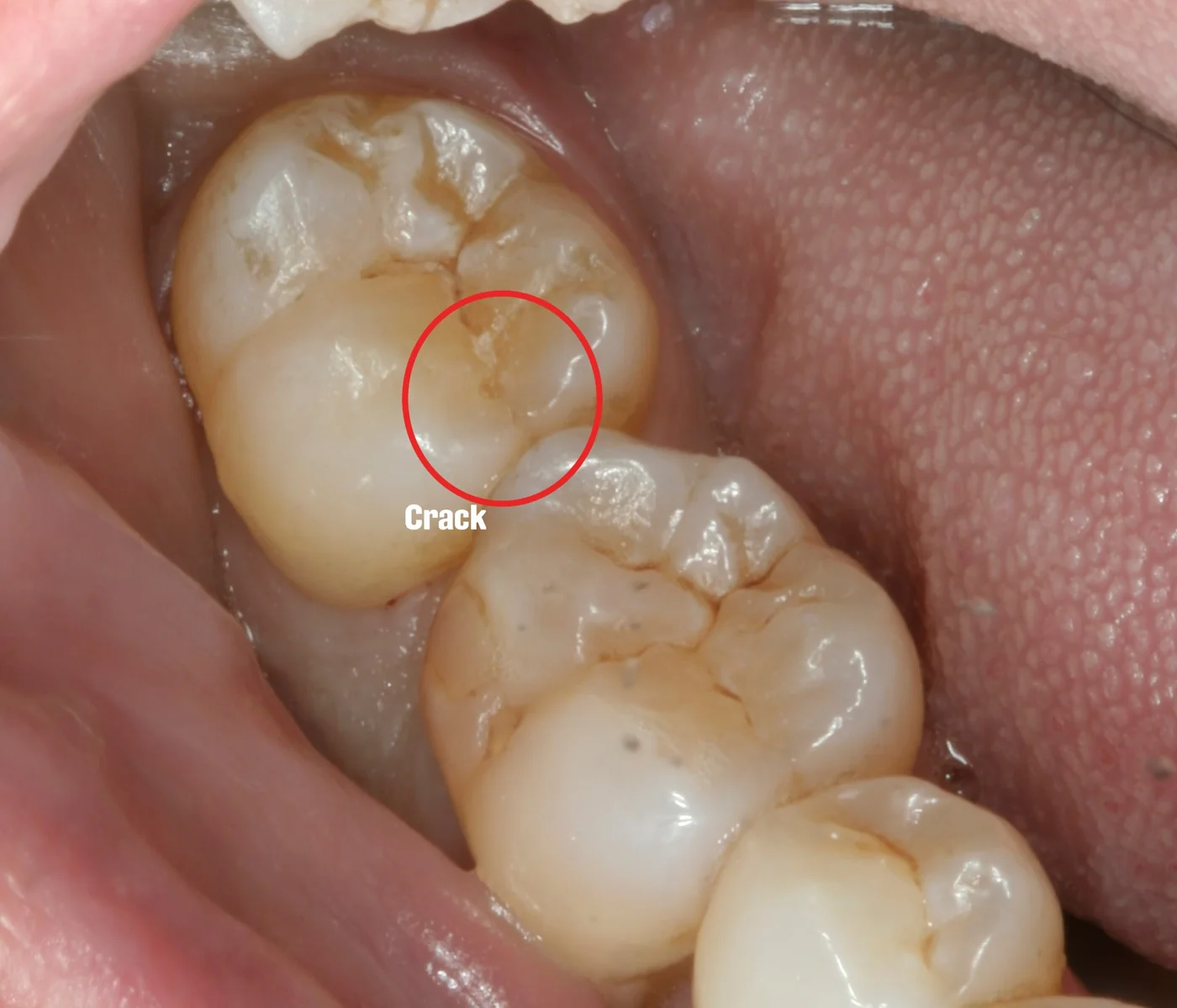
A craze line or a crack?
Not every line you can see in a tooth is a crack. Craze lines are fine lines in the outer enamel, and they’re common as teeth age. They usually don’t need treatment. A crack goes into the tooth itself, and that’s the kind that can progress. Telling the two apart is part of the exam, and we’ll show you what we’re seeing.
Why cracks start around fillings
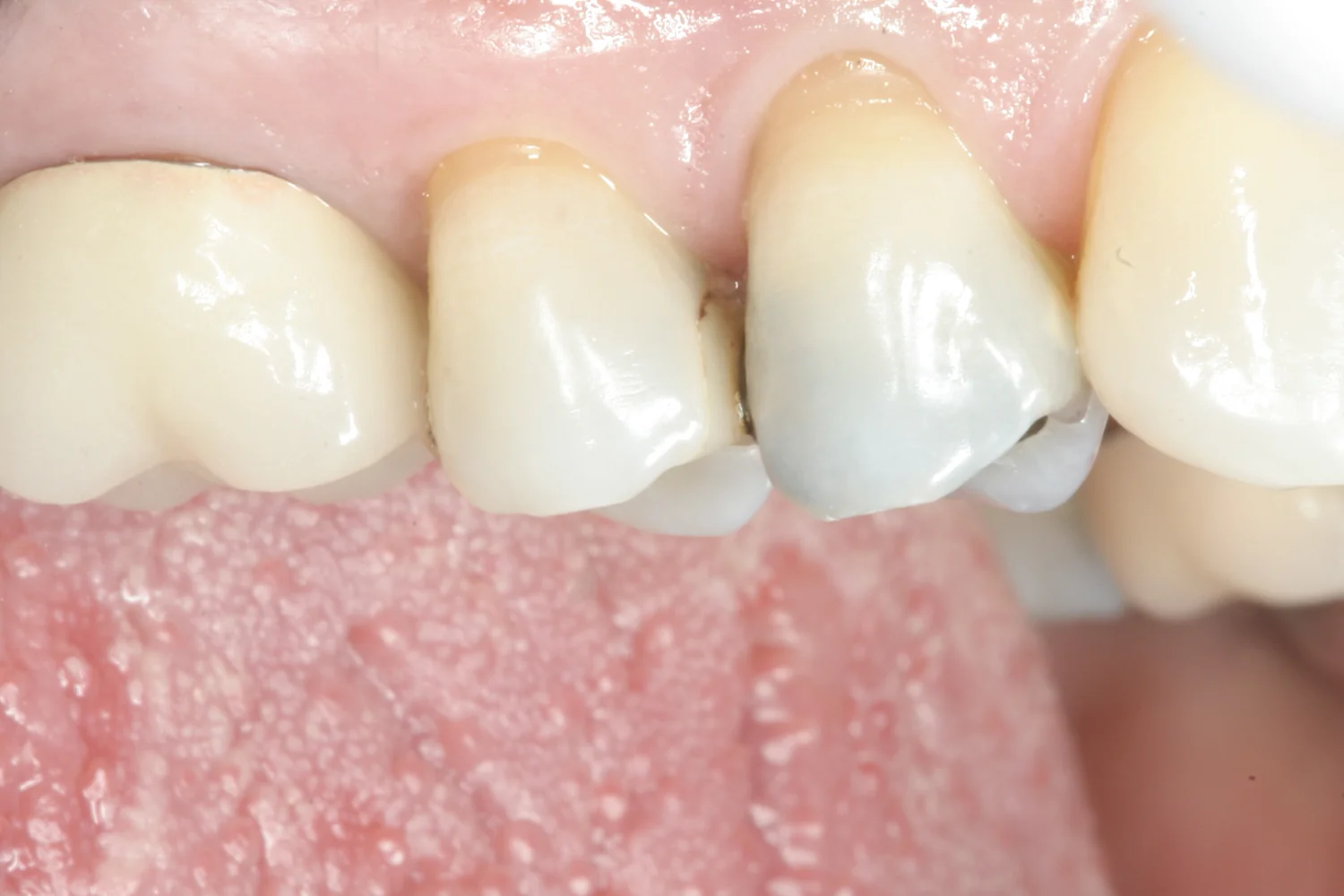
A filling replaces the part of the tooth that decay took away, but it doesn’t make the tooth any stronger. The bigger the filling, the thinner the walls of tooth left around it. Thin walls flex every time you chew, and that flexing is how cracks start and spread.
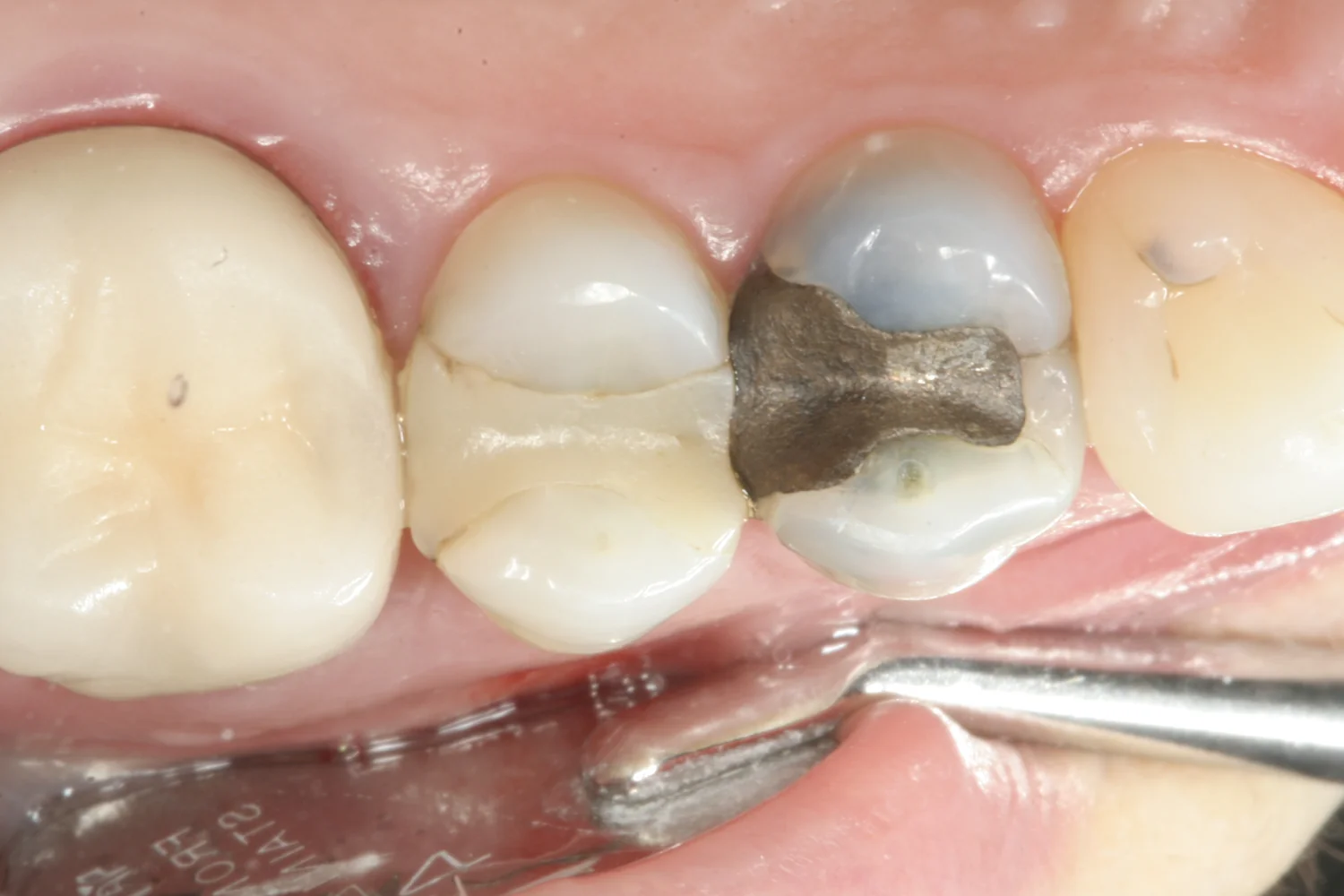
Why “it doesn’t hurt” isn’t reassuring
Many cracks give no symptoms at all, right up until a piece of the tooth breaks off. You also can’t tell from the outside how deep a crack goes. A tooth that doesn’t hurt tends to get left alone, but whether a crack can be fixed is decided by where it runs, not by whether it’s bothering you.
Where the crack runs decides everything
- A corner that breaks off above the gum is usually fixable, often with a crown.
- A crack that travels down the root, or below the gum and the bone around it, often can’t be repaired, and the tooth has to come out.
A crack that’s fixable today can turn into the second kind by continuing to flex under your bite. That’s why we don’t recommend “watching” a cracked back tooth.
What we usually recommend
A crown covers the tooth and holds the cracked walls together, so they can’t keep flexing apart. Another filling patches the spot but doesn’t stop the flexing. If the crack has already reached the nerve, the tooth may need a root canal before the crown.
Call us sooner if
- A tooth stays sore when biting for more than a few days. A tooth can get bruised, say from biting something hard, and settle down on its own. One that’s still tender after a few days should be checked.
- A piece of the tooth breaks off
- The tooth starts reacting to cold
The full story: Why Are My Teeth Chipping? and Dental Crowns
Chairside Q&A from Douglas Sandquist, DDS, Sandquist Dentistry, Las Vegas. More quick answers.