

You’ve been told a tooth needs a crown, and you want to know what you’re in for: whether it hurts, how many appointments it takes, and how long it will last once it’s on.
The short answer
- It shouldn’t hurt while it’s being done, because the tooth is numb.
- It usually takes two visits about two weeks apart: about an hour for the first, about 30 minutes for the second, with a temporary crown in between.
- Most crowns last somewhere between 5 and 20 years, and many in our practice are past 20.
Does getting a crown hurt?
Not while it’s being done. The tooth is completely numb before I start, and how I numb it depends on where it is.
- Upper teeth are usually numbed with a small amount of anesthetic placed just over the outside of the tooth. Once in a while I also numb the inside, by the palate, but most of the time it isn’t needed.
- Lower back teeth are usually numbed by blocking the nerve that supplies that side of the jaw. It numbs the teeth, your lip and the side of your tongue on that side, which is why your lip feels big for a few hours afterward.
- Lower front teeth can sometimes be numbed with a smaller injection near the premolars instead.
Afterward, it’s normal for the tooth to be tender for a few days, especially if it was inflamed to begin with, and for the new crown to feel a little strange for a week or so while you get used to it.
If it still aches after a few weeks, it’s worth a look. Often it’s the bite, and a small adjustment fixes it. Sometimes it’s the nerve inside the tooth. Any crown carries some risk of the tooth needing a root canal later, and that risk is higher when the tooth has already had fillings or an earlier crown. If it comes to that, the root canal is done by an endodontist.
How long does it take to get a crown?
Usually two visits, about two weeks apart.
- The first visit, about an hour. I numb the tooth, shape it, take a digital scan of the prepared tooth and your bite, and send you home with a temporary crown.
- The second visit, about 30 minutes. The temporary comes off, I check the fit and the bite of the new crown, and it’s cemented in place.
The two weeks in between are when the lab makes your crown. We don’t make same-day crowns anymore, and here’s why. The temporary isn’t just a placeholder, either. You chew on it for two weeks, and if something about the shape or the bite needs to change, we find out before the permanent crown is made. If your temporary comes off, here’s what to do.
How long do crowns last?
Most last somewhere between 5 and 20 years, and many go well past that. We have a lot of crowns in our practice that are over 20 years old. T.C.’s crowns were photographed twenty years after they went in.
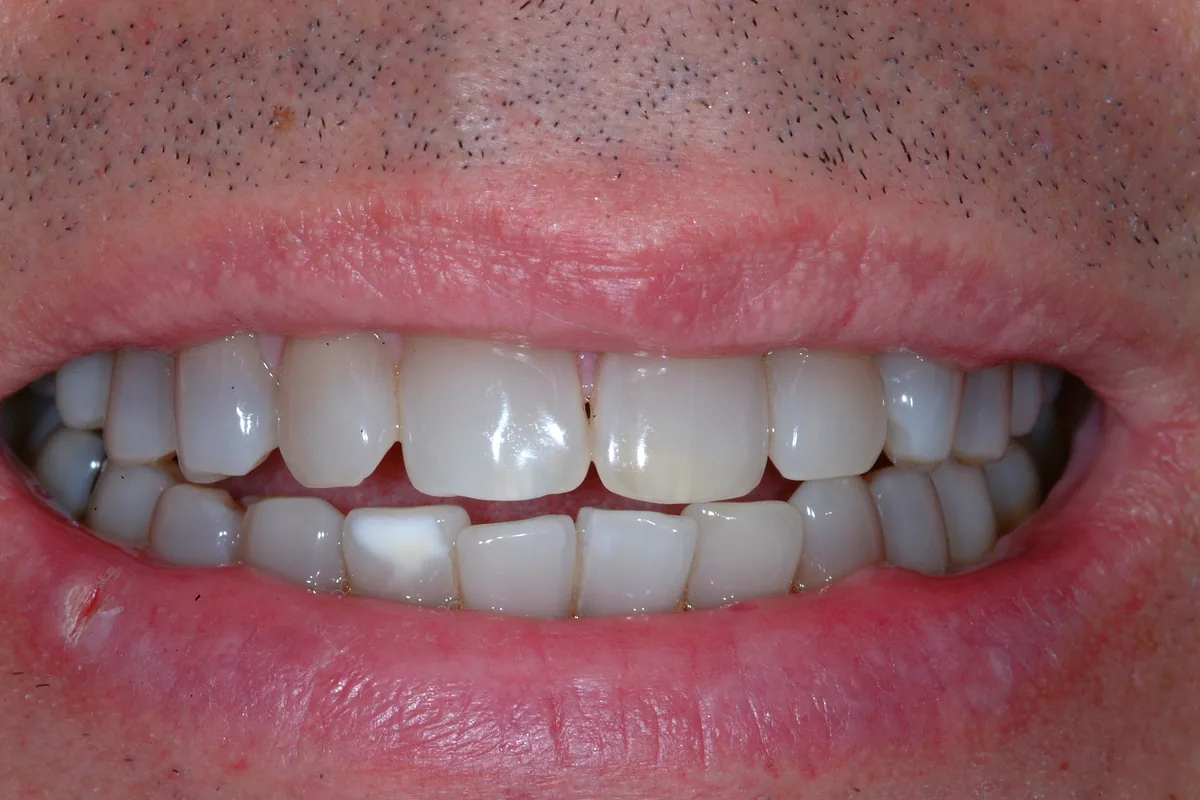
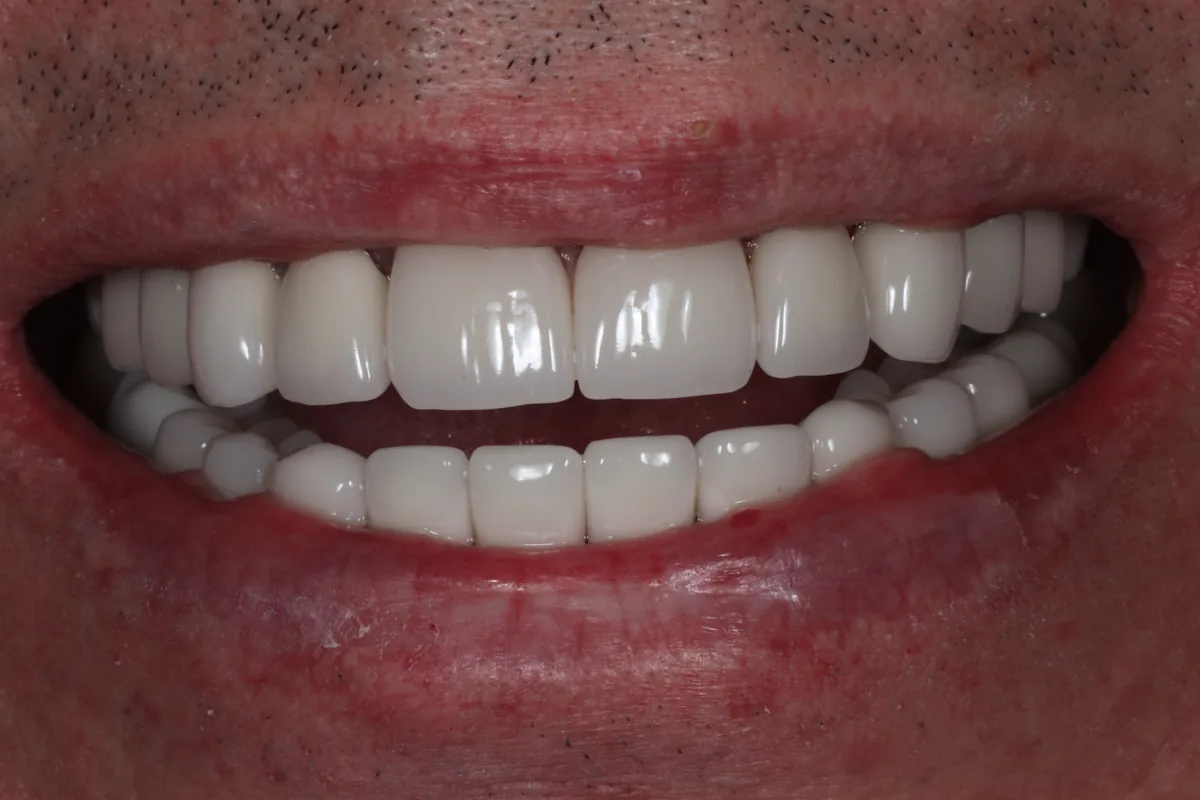
T.C. before his crowns in 2003, and the same crowns in 2023, twenty years later.
You may have heard “five years.” That number comes from dental insurance: most plans will pay toward a new crown once the old one is five years old. It’s a payment rule, not a prediction of how long yours will last.
How long a crown lasts depends on a lot of things, and some of them aren’t in anyone’s control. Sometimes life happens:
- A crown, or the tooth under it, can fracture, especially in someone who clenches or grinds.
- A health event can lead to decay at the edge of the crown, or to gum disease around the tooth.
What helps most is the ordinary part: keeping your cleanings so the edges get checked and any decay is caught while it’s small. For some people who grind or clench, a night guard helps protect the crown. For others it doesn’t add much, because they clench as much during the day as at night, and a night guard only covers the night. That’s a case-by-case call we make together.
Which material I use
For most molars I use zirconia, the strongest of the crown materials. From the premolars forward, and for most front teeth, I use pressed lithium disilicate (e.max or LiSi Press), which looks more like natural tooth. More on how we choose the material for each tooth.
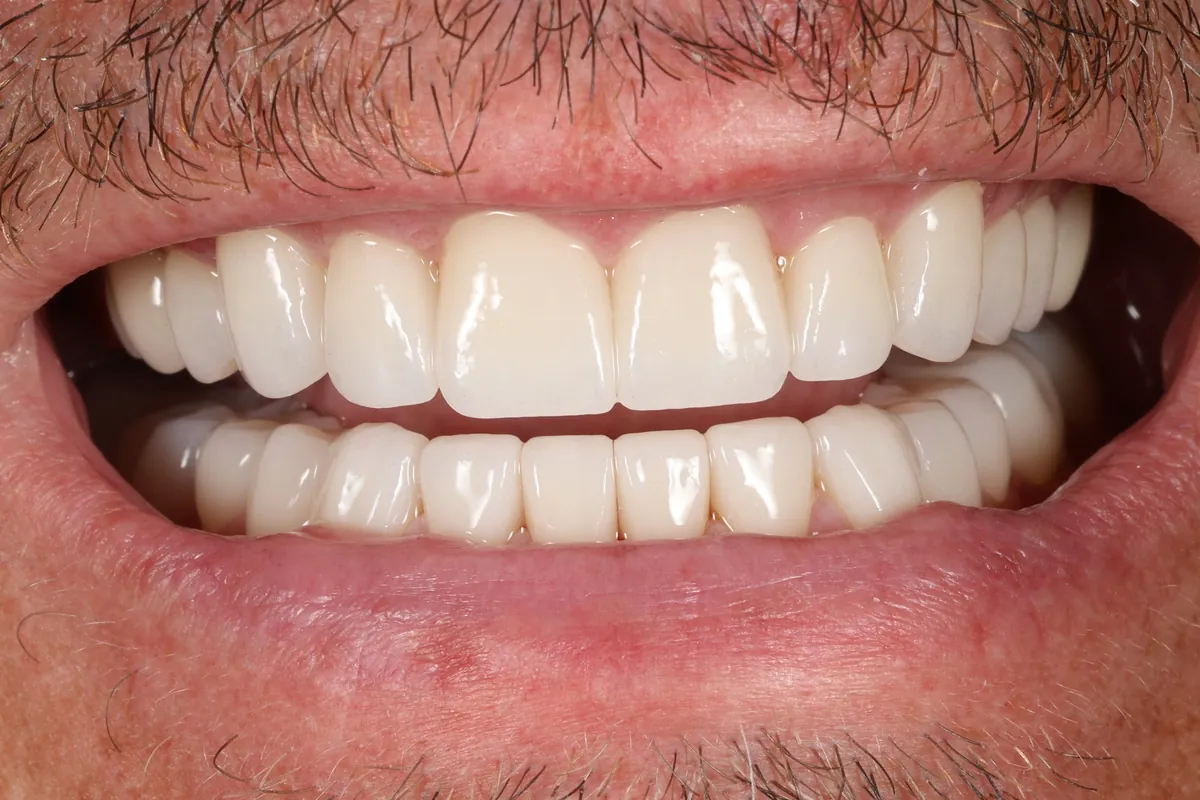
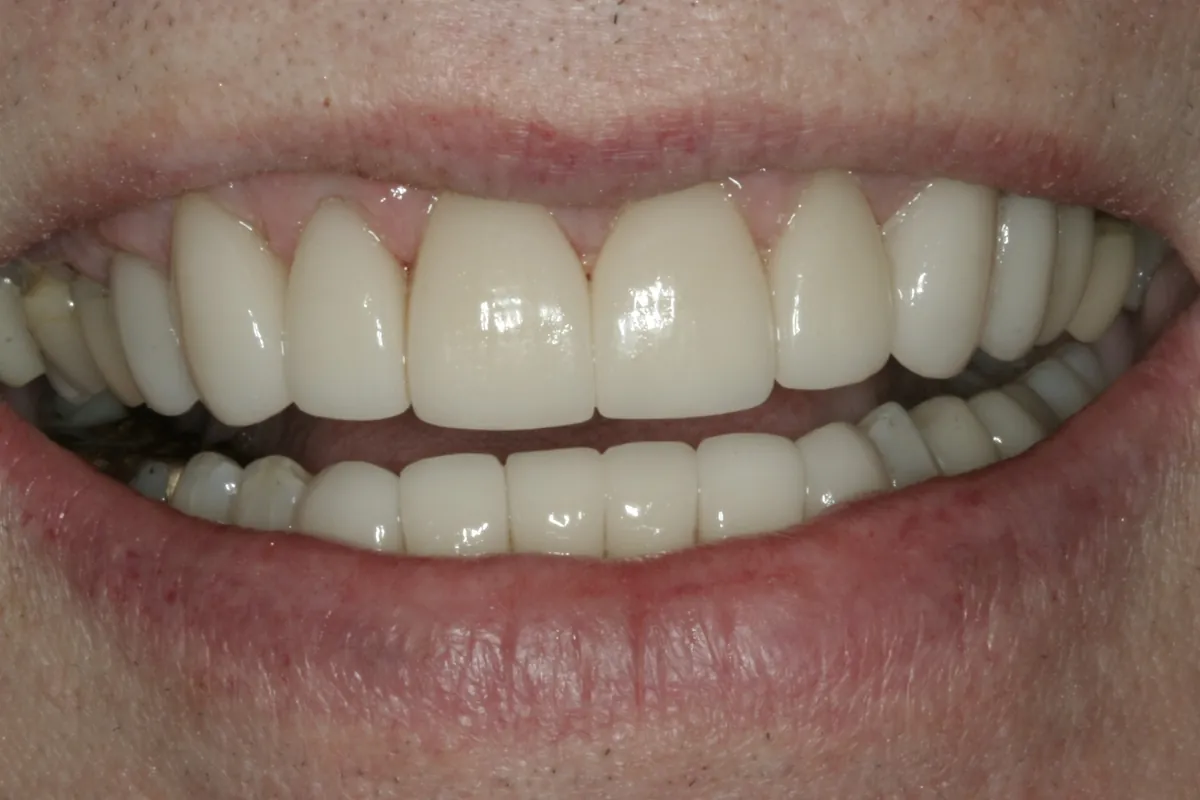
Zirconia on P.B. (left), the strongest material, after years of erosion had worn his teeth down. e.max on S.C. (right), chosen to blend in at the front of the mouth.
Before you get one
Not sure you need a crown at all? Crown or filling? How we decide. Crown came off? What to do. A dark line where the crown meets the gum? Why that happens.
If you’ve been told you need a crown and want a second look, call 702-734-0776 or tell us what’s going on.
General education, and not a substitute for an exam.